

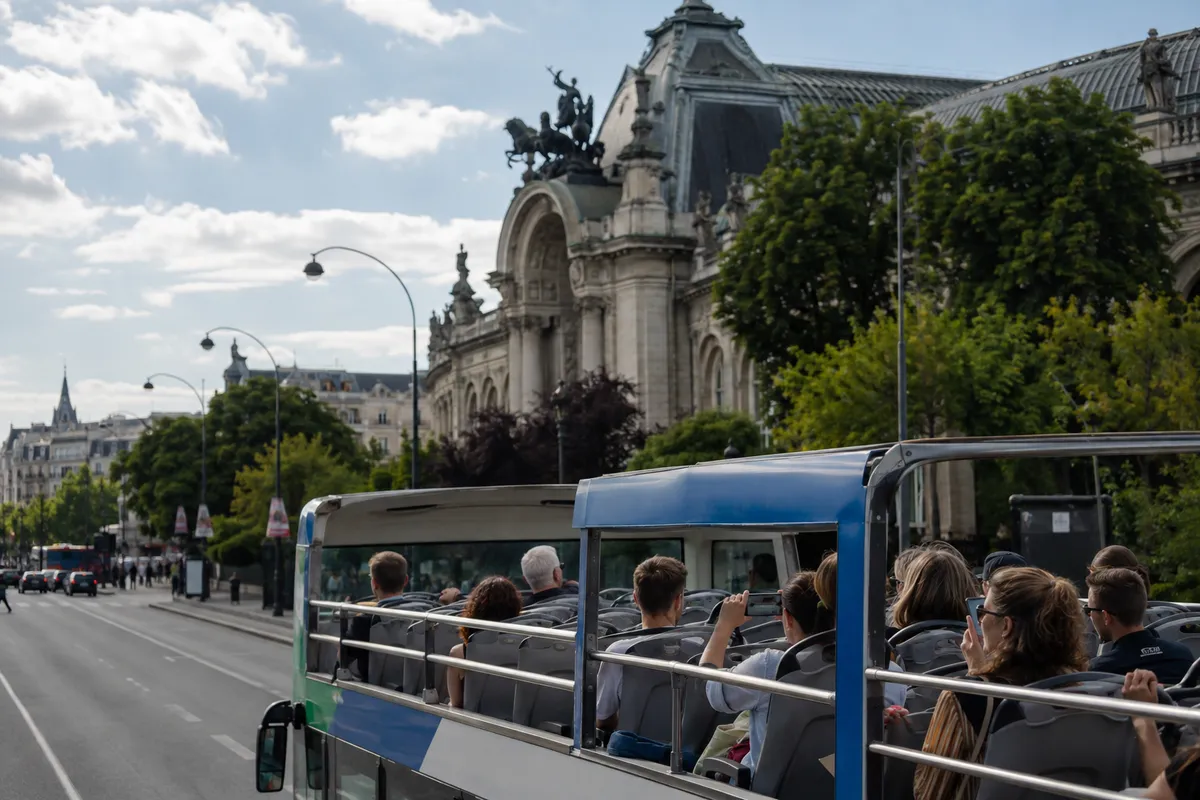
Municipal clean-air zones and strict anti-idling regulations have forced sightseeing bus operators to overhaul their fleets across Western Europe, but the transition has created unexpected logistical hurdles for visitors. Fleet electrification and biofuel retrofits reduce exhaust smell on the street level, yet urban traffic restrictions, strict bans on passenger luggage, and early evening route shutdowns mean that treating an open-top bus like standard public transit will disrupt your travel schedule. In this Tootbus review 2026, I evaluate whether the company's repowered buses and digital tools deliver sufficient sightseeing value across London, Paris, and Brussels to justify their premium fares.
Travelers seeking a stress-free orientation circuit with integrated walking commentary or river cruise connections will appreciate the rolling-hour ticket mechanics and lower-deck quietness. However, visitors aiming to move luggage between train stations or squeeze transit out of an evening itinerary will find these daytime circuits unusable. Here is an unvarnished audit of route performance, onboard acoustic realities, and operator changes across all three capital networks.
Fleet Decarbonisation, Drivetrain Tech, and Corporate Structure
Eco-Fleet Technology: Electric Conversions, HVO Biofuel, and Pan-European Strategy
Unlike legacy sightseeing operators that continue running aging Euro V diesel engines in dense tourist cores, Tootbus has committed to an alternative-fuel strategy across its Western European routes. The company operates a 100% low-emission fleet where 35% of the total vehicle stock is fully battery-electric, while the remaining 65% runs on renewable HVO biofuel (Hydrotreated Vegetable Oil) or Bio-NGV compressed gas. This operational mix allows the operator to maintain high departure frequencies without violating local low-emission zone thresholds.
On the street, the difference between these drivetrains is immediately noticeable. When boarding at crowded curbsides, the absence of sulfur-heavy diesel fumes eliminates the nauseating idling exhaust that frequently plagues open-top upper decks at traffic lights. Tootbus maintains a corporate objective to phase out internal combustion drivetrains across London, Paris, and Brussels entirely by 2030, aligning its vehicle rollouts with tightening municipal clean-air directives.
- Battery-Electric Stock (35%): Zero tailpipe emissions, regenerative braking, and silent curb departures deployed across core metropolitan routes.
- Renewable HVO Biofuel and Bio-NGV (65%): Drop-in fossil-free fuels providing up to 90% net carbon reductions for longer secondary routes.
- Target 2030 Mandate: Complete transition to zero-emission propulsion across all Western European operating hubs.
Corporate Ownership Shift: RATP Dev Transition to FirstGroup plc
Behind the scenes, the operator underwent a structural transition that affects administrative governance. In December 2025, French transit authority RATP Dev finalized the sale of its UK sightseeing bus operations in London and Bath to British transport giant FirstGroup plc. This divestment was executed under a 12-month Transitional Service Agreement (TSA) while preserving the unified Tootbus consumer brand and operational identity across borders.
For passengers traveling between the UK and mainland Europe, the primary operational risk during such transitions involves fragmented customer service channels and potential digital ticketing glitches between domestic and international platforms. Although ticketing databases currently integrate via the central mobile application, customer escalation for lost items or disputed charges in London now routes through FirstGroup's UK operational desk rather than Parisian support teams. When planning cross-border itineraries, reviewing major hop-on hop-off bus operators compared helps clarify how corporate structures impact regional service reliability.
Tootbus London: Routes, Traffic Congestion, and Repowered EV Buses
London Discovery Route: Loop Schedules vs. Real-World Traffic Congestion
The core sightseeing circuit in the UK capital is the London Discovery route, which comprises three linked circuits: Red, Blue, and Green. The primary central spine is the Red Route (formerly operated under the Yellow Route banner), which connects key landmarks including Trafalgar Square, Piccadilly Circus, and Westminster Bridge. The official operator timetable promises a complete circuit duration of 2 hours and 15 minutes, but urban road realities tell a drastically different story during peak operating hours.
During my weekday afternoon field audit, traffic bottlenecks along Whitehall and approaching the Westminster Bridge junction stretched the continuous circuit to 2 hours and 50 minutes. At congested pedestrian crossings near Piccadilly, buses idle through multiple light cycles while passenger boarding queues back up onto narrow pavements. Knowing how gridlock affects open-top vehicles is critical; consulting our London hop-on hop-off bus guide provides alternative walking shortcuts when central Zone 1 roads stall.
| Route Segment / Metric | Scheduled Timetable | Observed Peak Delay Duration | Key Bottleneck Hazard |
|---|---|---|---|
| Red Route Full Loop | 2 hours 15 minutes | 2 hours 30 min – 3+ hours | Westminster Bridge & Parliament Square |
| Piccadilly to Trafalgar Sq | 15 minutes | 35–45 minutes | Pedestrian crosswalks & delivery vans |
| Tower Hill to London Bridge | 20 minutes | 30–40 minutes | River crossing bottleneck corridors |
Pro-Tip: Board the Red Route between 08:30 and 10:00 at major hubs like Grosvenor Gardens or Trafalgar Square. Completing the central loop before midday ensures you clear Zone 1 vehicular choke points before commuter and delivery traffic compounds.
Engineering and Infrastructure: Magtec Repowered Double-Deckers in Wandsworth
To accelerate its London decarbonisation program without waiting years for new bus chassis deliveries, Tootbus contracted UK engineering firm Magtec to execute an extensive retrofit program. Magtec converted 15 tri-axle Volvo B9TL double-deckers from diesel propulsion to fully electric drivetrains, fitting them with 280 kWh lithium-ion battery packs that eliminate street-level tailpipe exhaust. The resulting repowered EV bus fleet documented by Sustainable Bus delivers immediate acceleration without the mechanical shudder typical of aging diesel transmissions.
Fleet charging is anchored at the operator's Wandsworth depot, where energy management company VEV deployed smart charging infrastructure and an on-site solar array. The rooftop solar generation produces 65,000 kWh annually, managed via the proprietary VEV-IQ platform to balance grid demand during overnight vehicle recharging cycles. On the road, lower-deck passengers immediately notice the lack of engine heat and mechanical rumbling, transforming what was once a rattling ride into a smooth electric transit experience.
London Pricing, Thames River Cruise Combo, and Child Policies
Ticketing for the London Discovery tour follows a dynamic pricing structure. A standard walk-up adult 24-hour hop-on hop-off pass purchased directly on the street retails at £44.00 (approximately $58 USD). Securing your ticket in advance via the operator website drops that price to between £35.20 and £37.40 ($46–$49 USD). For an additional cost, Tootbus offers the Must See London pass from £49.00 ($64 USD), which packages the 24-hour electric bus ticket with a one-way City Cruises boat journey.
When boarding with the cruise bundle, the bus driver validates your digital pass and prints two physical paper slips: one for bus transit and one redemption voucher for the boat pier. Cruise departures operate from Westminster Pier or Tower Pier, allowing you to bypass congested bridges by water. Family budgets benefit from the London child age threshold: infants under 5 years travel free when seated on an adult's lap, whereas children aged 5 to 15 require a youth ticket. For broader fare breakdowns across operators, examine our hop-on bus ticket pricing guide.
Tootbus Paris Review: Blue Route Coverage, River Cruises, and Street Closures
Paris Discovery Blue Route: Stops, Landmark Circuit, and Route Timings
In the French capital, Tootbus operates a consolidated network centered on a single flagship loop: the Paris Discovery blue route. This continuous circuit encompasses 10 fixed stops, anchoring major tourist nodes including Stop 1 at Opéra / Grands Magasins, Stop 2 outside the Musée du Louvre, and Stop 9 directly facing the Tour Eiffel along Quai Branly. Under normal traffic conditions, completing the uninterrupted circuit takes approximately 2 hours, with scheduled headways running every 7 to 15 minutes depending on the tourist season.
Pricing for the Parisian service remains higher than municipal transit options. A standard adult 24-hour pass retails between €45.00 and €49.00 (around $49–$54 USD), while tickets for children aged 4 to 12 cost €25.00 to €27.00 ($27–$30 USD). The route provides unhindered elevated views across the Haussmannian boulevards, but traversing the central bridges requires patience due to dense taxi and bicycle traffic. Readers can compare this setup to other local operators in our Paris sightseeing bus guide.
Champs-Élysées First-Sunday Reroutes and Urban Traffic Contingencies
Urban planning policies in Paris present regular operational disruptions for sightseeing buses. The most significant recurring obstacle occurs on the first Sunday of every calendar month, when municipal authorities implement mandatory pedestrianisation along Avenue des Champs-Élysées. On these dates, the primary thoroughfare is closed entirely to vehicular traffic, preventing buses from accessing the monument roundabout at Place Charles de Gaulle.
Rerouting Warning: On the first Sunday of each month, Stop 7 ("Arc – Champs-Élysées") is relocated to 8 Avenue Kléber. Passengers waiting at the usual stop by the Arc de Triomphe will miss their bus; you must walk roughly 250 meters south along Avenue Kléber to reach the temporary boarding sign posted on the sidewalk.
Aside from scheduled monthly closures, spontaneous traffic diversions around Place de la Concorde frequently introduce 20- to 30-minute delays. Tootbus drivers must alter their paths down secondary quais when police close central bridge access, occasionally bypassing scheduled stops without prior app notifications. Always consult the live operational feed on the Tootbus Paris service traffic update before waiting at curbside markers.
Seine River Cruise Packages: The Vedettes de Paris Integration
Combining open-top bus transit with a river cruise represents one of the most efficient ways to split sightseeing across Paris. Tootbus packages its 24-hour bus ticket into the "Must See Paris" pass, priced between €59.00 and €63.00 ($65–$69 USD) for adults according to Paris Je T'aime tourism ticketing. This bundle pairs the Blue Route with a 1-hour narrated Seine cruise operated by Vedettes de Paris, which departs from the floating pontoons at Port de Suffren right below the Eiffel Tower.
Evaluating this bundle requires basic math: standard single-entry cruise tickets at Port de Suffren cost roughly €18 to €20, meaning the combined ticket saves approximately €4 to €6 over separate street bookings. Children under 4 years travel completely free across both the bus network and the Vedettes de Paris boat fleet when sitting on an accompanying adult's lap. Travelers seeking multi-attraction itineraries can find additional strategies in our guide to hop-on hop-off combo deals.
Tootbus Brussels: Full Network Electrification and City Loop Performance
STIB Municipal Partnership and the 9-Bus Zero-Emission Double-Decker Fleet
While London relies on repowered chassis and Paris runs a transitional mix of biofuels and electrics, the Belgian capital operates the network's premier eco-showcase. Brussels boasts the first 100% fully electric sightseeing fleet in the Tootbus portfolio. Launched in operational coordination with Brussels municipal transit operator STIB (Société des Transports Intercommunaux de Bruxelles) in 2021, the system runs with 9 dedicated, zero-emission open-top electric double-decker vehicles.
Because Brussels features steep topographical ascents between the lower historic core around the Grand-Place and the elevated Royal Quarter, diesel buses traditionally suffered from loud engine strains and heavy soot emissions along these uphill corridors. The electric drivetrains eliminate this noise entirely, gliding up the Mont des Arts incline with consistent, vibration-free torque. For passengers sitting on the lower deck, the absolute silence when waiting at traffic signals near Parc de Bruxelles provides a stark, welcome contrast to traditional commercial diesel fleets.
Brussels Discovery Route: Street vs. Online Fare Differentials and Schedules
The Brussels Discovery route operates as a circular tour designed to showcase both historic administrative quarters and suburban European Union institutions. Fares in Brussels are lower than those in London or Paris, though a noticeable purchasing penalty applies to curbside transactions. Adult passes booked online cost €33.00 ($36 USD), whereas purchasing directly from street concierges or bus drivers costs €36.00 ($42 USD). Children under 4 years travel free when seated with an adult.
The primary constraint in Brussels involves restrictive operating timetables. Depending on the month, final daily departures leave terminal stops between 16:00 and 17:00. This early curfew catches many tourists off guard; boarding an electric double-decker after an afternoon museum visit at 15:30 means you can only complete a partial loop before vehicles head to the depot. Carefully scheduling your stops around these operating hours is essential to avoiding stranding yourself far from your accommodation.
Onboard Experience and Digital Tools: Tootie AI, Audio Commentary, and Tootwalks
Digital Navigation: Live GPS Vehicle Tracking and the Tootie AI Assistant
The Tootbus smartphone application (available for iOS and Android) serves as the primary navigation hub for passengers. The app integrates live GPS vehicle tracking, displaying real-time bus icons advancing along street maps alongside estimated arrival times for every designated stop. In practice, vehicle location pins update every 15 to 30 seconds over cellular networks, though server lag can occasionally cause an approaching bus to appear two blocks behind its actual street position.
The application also embeds a generative digital concierge named 'Tootie.' This AI assistant answers practical queries regarding monument histories, next-departure timings, and local neighborhood dining. During testing, Tootie reliably provided operating hours and walking directions for major landmarks like the Panthéon and St Paul's Cathedral. However, when asked for niche dining recommendations, the assistant defaulted to broad, generic lists of nearby brasseries rather than vetted local establishments.
Audio Commentary Systems: 3.5mm Headphone Jack vs. App Streaming
Audio delivery on Tootbus vehicles uses two separate conduits: physical hardwired seat jacks and mobile app streaming over onboard Wi-Fi. Every individual passenger seat is equipped with a standard 3.5mm headphone jack and channel/volume selector. While the company distributes complimentary single-use wired plastic earphones upon boarding, drivers actively encourage passengers to supply their own headsets to minimize single-use plastic waste.
Acoustic performance diverges radically depending on which deck you occupy. While the electric powertrain eliminates mechanical engine rumble on the lower enclosed level, the open upper deck experiences severe wind turbulence once bus speeds exceed 30 km/h along river embankments. Smartphone speakers streaming app audio are completely overwhelmed by aerodynamic buffeting, and the cheap plastic earbuds handed out at the door lack sufficient seal to block external traffic roar. Bringing your own tightly fitted wired in-ear monitors or a dedicated USB-C/Lightning dongle is mandatory if you intend to follow the historical narrative clearly.
Hardware Checklist: Modern smartphones lack analog audio jacks. If you plan to use the vehicle's hardwired seat audio system, pack standard 3.5mm wired earphones; if you stream via the Tootbus mobile application, use noise-isolating wireless earbuds with active wind reduction.
Self-Guided Pedestrian Exploration: Tootwalks GPS Walking Tours Tested
One of the most valuable inclusions in the Tootbus ticket catalog is 'Tootwalks'–a suite of self-guided, GPS-triggered pedestrian audio tours built directly into the smartphone application. These walks unlock automatically upon ticket validation and remain accessible even after your bus transportation window expires. The current itinerary library contains:
- Paris (5 Themed Walks): Including architectural surveys of Montmartre, royal heritage in the Marais, and historic riverbank strolls.
- London (6 Themed Walks): Covering royal ceremonies around Westminster, maritime Greenwich, and City finance history.
- Brussels (4 Themed Walks): Spotlighting comic strip street murals, Art Nouveau facades, and historic guildhalls around the Grand-Place.
During a field walk along the London architecture circuit, GPS audio triggers activated cleanly within 5 to 10 meters of approaching designated historic facades. The application caches audio files and route mapping offline, preventing excessive mobile data consumption while navigating narrow European side streets where cellular reception occasionally drops.
Operational Limitations: Luggage Bans, Timetables, and Passenger Accessibility
Physical Accessibility: Low-Floor Ramps and Deck-Level Wheelchair Restrictions
Modern fleet upgrades have improved step-free boarding access across London, Paris, and Brussels. Every electric and HVO bus in active Tootbus service features a low-floor entrance chassis and an extendable boarding ramp operated manually or electronically by the driver. Inside, a dedicated ground-floor securement bay accommodates one wheelchair passenger per vehicle, complete with safety backrests and automated stop-request buttons positioned at seated height.
However, accessibility is strictly bounded by vehicle architecture. Due to narrow spiral stairwells and strict low-emission safety mandates, wheelchair users cannot access the upper open deck under any circumstances. Wheelchair passengers must remain within the lower enclosed saloon throughout the journey. Because each bus features only a single wheelchair position, travel companions using multiple mobility devices cannot board the same vehicle and must stagger journeys across successive departures.
Strict Luggage Prohibitions and Daytime-Only Operating Cutoffs
A frequent point of friction for unsuspecting tourists involves baggage policy. For passenger safety, aisle clearance, and emergency egress protocols, Tootbus strictly prohibits suitcases, wheeled cabin bags, and large travel luggage on board across all three cities. Drivers will turn away passengers carrying roll-aboard suitcases at the boarding door, permitting only small personal handbags and compact daypacks.
Luggage Prohibition Warning: Tootbus vehicles cannot be used as airport or railway station transfers. If you arrive at St Pancras International, Gare du Nord, or Bruxelles-Midi with luggage, you must store your bags in paid station lockers before attempting to board the sightseeing bus.
Furthermore, these services do not function as late-night municipal transit. Operating schedules remain strictly daytime-focused. Depending on the season, final loop departures terminate as early as 16:00 to 17:00 in London and Brussels, and 17:00 to 19:00 in Paris. Travelers expecting to use their passes for evening transport to restaurants or theaters will find the buses retired to depots before dusk, forcing them onto local subways.
Rolling Clock Validity Rules and 24-Hour Cancellation Policies
A notable structural advantage of the Tootbus ticketing system is its rolling-hour validity model. Unlike conventional sightseeing passes that expire at midnight on the day of activation, every 24, 48, or 72-hour Tootbus ticket operates on a continuous, down-to-the-minute rolling hourly clock. If you scan your digital barcode on an electric double-decker at 14:15 on a Tuesday, your pass remains completely valid for boardings until 14:15 on Wednesday afternoon.
This rolling framework makes afternoon arrivals viable, allowing you to split sightseeing across two calendar days without paying for double passes. Complementing this ticketing flexibility is an accommodating cancellation policy: all standard bookings canceled through the official app or portal at least 24 hours prior to the scheduled travel date receive a 100% full refund with zero processing fees. For an in-depth strategy on scheduling multi-day passes, read our guide on how to plan hop-on hop-off bus itineraries.
Final Verdict: When to Book Tootbus Over Competitors in 2026
Strengths vs. Weaknesses: Environmental Performance vs. Urban Realities
Weighing the merits of Tootbus against the broader sightseeing market requires balancing eco-friendly mechanical execution against the immovable realities of urban traffic congestion. The silent acceleration of repowered electric drivetrains drastically improves curbside and lower-deck comfort, while rolling-hour ticketing and complimentary Tootwalks deliver measurable consumer value that legacy operators often omit.
Conversely, the high ticket price must be reconciled against operating limitations. Gridlocked traffic loops that turn a 2-hour tour into a 3-hour crawl, severe top-deck wind noise that drowns out mobile audio, absolute bans on luggage, and early evening route closures prevent this service from being a universal transit solution. Understanding these trade-offs is crucial when determining if hop-on hop-off buses are worth it compared to regional public transit.
| Operational Feature | Tootbus Performance | Consumer Takeaway / Operational Impact |
|---|---|---|
| Fleet Emissions | 100% Low-Emission (35% EV, 65% Biofuel) | Zero lower-deck diesel fumes or mechanical vibrations |
| Ticket Validity | Strict Rolling 24/48/72-Hour Clock | Valid from activation minute across two calendar days |
| Baggage Rules | Strict Ban on Rolling Luggage | Small daypacks only; unusable as airport/train transit |
| Operating Hours | Daytime-Only (Final runs 16:00–19:00) | Cannot serve as evening transportation |
| Walking Content | Tootwalks Included (4–6 per city) | High-value GPS tours remain accessible post-expiration |
Tootbus vs. Competitors: Deciding Between Big Bus, City Sightseeing, and Public Transit
When selecting a sightseeing provider in Western Europe, Tootbus stands head-to-head with commercial rivals Big Bus Tours and City Sightseeing, as well as municipal public transit networks. In Brussels, Tootbus holds an undisputed environmental lead with its dedicated 9-bus zero-emission double-decker fleet, whereas rivals in London and Paris still mix older diesel chassis into peak schedules alongside electric units. However, Big Bus often runs later evening circuits, which can tilt the balance for tourists focused on night photography.
Comparing Tootbus directly to municipal transit reveals stark financial differences. In London, Transport for London (TfL) caps daily bus fares at £5.25 using contactless payment, compared to Tootbus's £35.20+ advance sightseeing pass. In Paris, standard metro/bus tickets cost between €2.15 and €2.50, and Brussels STIB journeys retail from €2.20. You do not purchase a Tootbus pass for economical point-to-point transit; you buy it for elevated top-deck photographic vantage points, automated multilingual context, and turn-key routing past dense monuments without navigating underground labyrinths. If you travel light, schedule your boarding before morning rush hours, and bring wired noise-isolating headphones, Tootbus delivers a clean, modern sightseeing circuit across Western Europe's most demanding urban centers.