

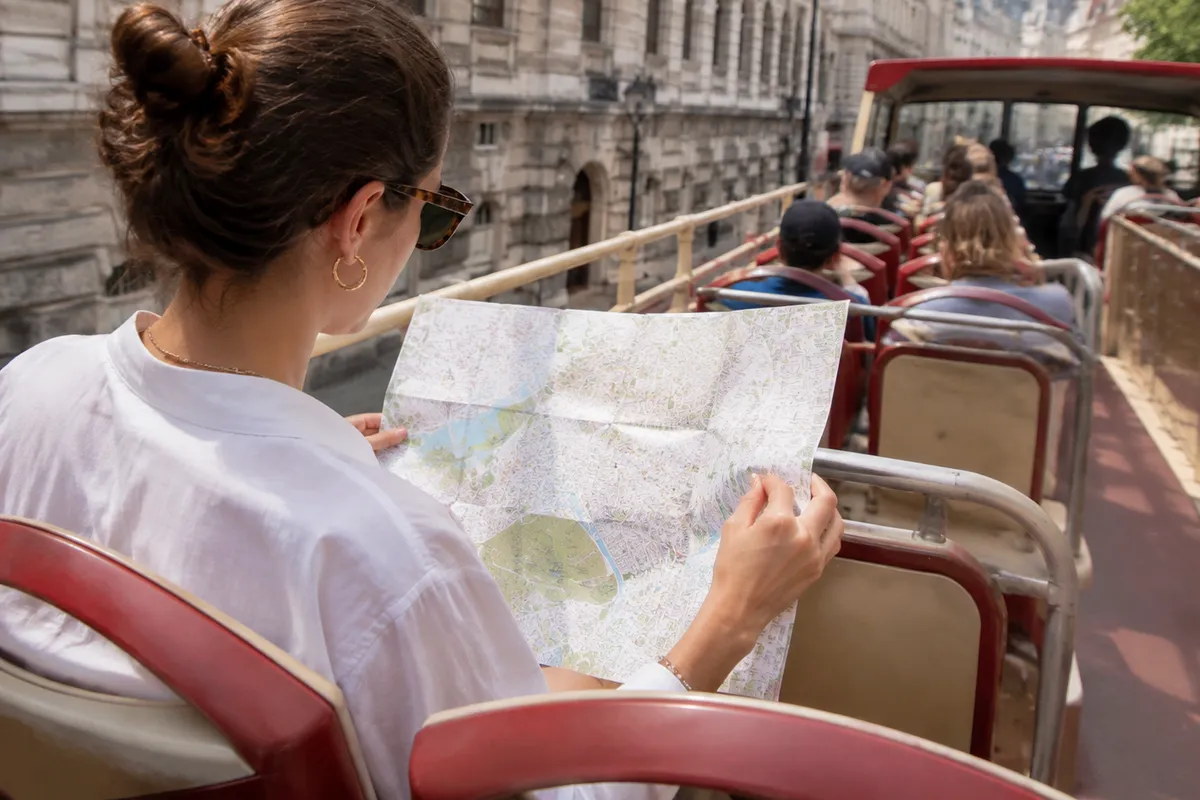
Municipal transport authorities across European and North American capitals have tightened peak-hour curb access, reduced bus stop dwell allocations, and stepped up low-emission zone mandates. For visitors building a hop on hop off itinerary, these regulatory shifts mean routes take longer to navigate, bus bunching is more pronounced, and unvalidated vouchers risk severe itinerary delays if boarding points move without notice.
A dedicated sightseeing circuit works well for first-time visitors, families wrangling folding strollers, and travelers who prioritize narrated orientation from an elevated viewpoint. It is counterproductive for fast-moving urban travelers, commuters, and budget backpackers who simply need point-to-point transit across town without paying a fourfold premium over local subways.
Ticketing Mechanics: How to Plan Sightseeing Bus Day Passes for Real Value
Rolling Hours vs Calendar Days: Timing Your Pass Activation
A primary trap in choosing an open-top bus pass lies in the definition of validity. Standard direct operator passes run on consecutive hours rather than calendar day blocks. If I board a double-decker and scan a 24-hour pass at 14:15 on a Tuesday, that barcode remains valid until 14:14 on Wednesday. Multi-day options enforce the same rigid continuity: 48-hour and 72-hour passes count consecutive hours from the initial scan and cannot be paused, frozen, or split across non-consecutive dates.
City attraction cards handle validity differently. Passes like The London Pass or the Go City Paris Pass enforce calendar-day expiration. Regardless of whether you initiate your first bus ride at 09:30 or 15:45, access terminates when the final bus pulls into the depot that evening, or at midnight. For a comprehensive look at duration rules, see our hop-on bus ticket pricing guide.
Unactivated digital and paper vouchers purchased online generally remain redeemable for up to 12 months from the booking date. Once that barcode touches an onboard scanner, the clock runs without interruption. In my experience logging boarding stamps, missing this distinction results in paying for a full second day when a late afternoon boarding could have bridged two half-days.
The Afternoon Activation Hack: Activate a 24-hour ticket at 14:00. Use the afternoon to complete an uninterrupted circuit and take an evening boat cruise, then use the following morning from 09:00 until 13:59 for targeted museum drops before the ticket expires.
Break-Even Ticket Calculation Across Global Operators
Sightseeing buses charge a significant premium over municipal transit systems. An adult 24-hour Discover ticket for Big Bus London starts online at £36.99 (against £43.99 at the curb), while the 48-hour Essential pass starts at £46.99 online, as verified on the Big Bus Tours London ticket portal. In contrast, Transport for London caps standard municipal bus travel at a flat £1.75 Hopper fare, allowing unlimited bus transfers within one hour.
In the United States, an adult 24-hour Big Bus New York Discover ticket ranges from $62.00 to $65.00, whereas the 48-hour pass runs between $83.00 and $87.00. A single MTA subway or local bus ride costs $2.90. In France, Tootbus Paris charges between €37.20 and €49.00 for a 24-hour ticket and €44.20 to €55.00 for 48 hours, compared to the regional Ticket Métro-Train-RER flat fare of €2.50. Rome presents a similar spread: 24-hour passes for Big Bus Rome and City Sightseeing run from €28.00 to €37.00, while an ATAC single metro ticket costs €1.50.
To justify a commercial sightseeing pass through pure transportation utility, you would need to board between 8 and 22 municipal trips in a single day. A break-even ticket calculation works only when you price in the high-elevation panoramic perspective, onboard audio commentary, and direct routing between dispersed tourist landmarks without navigating subway stairs.
| City & Operator | Online 24h Adult | Walk-Up 24h Adult | Local Transit Fare | Rides to Break Even |
|---|---|---|---|---|
| London (Big Bus) | £36.99 | £43.99 | £1.75 (Bus) | 22 bus journeys |
| New York (Big Bus) | $62.00 | $65.00 | $2.90 (Subway) | 22 subway trips |
| Paris (Tootbus) | €37.20 | €49.00 | €2.50 (Metro/RER) | 15 metro trips |
| Rome (Big Bus / CS) | €28.00 | €37.00 | €1.50 (Metro) | 19 metro trips |
Boarding Restrictions: Luggage, Accessibility, and Upper-Deck Safety
Navigating an open-top upper deck requires adherence to strict safety mandates. Moving while the bus is in motion is prohibited across all fleets. Drivers will shut off the engine and refuse to pull away from the curb until every passenger on the upper deck is seated. Refusing to sit down can lead to ejection from the vehicle without refund under commercial passenger safety regulations.
Luggage capacity on sightseeing fleets is virtually non-existent. Tootbus and Big Bus explicitly ban large suitcases, trunk-sized luggage, and oversize sports equipment on routes in central London, Paris, and Rome. The vehicles lack undercarriage luggage holds, and transport regulations prohibit blocking center aisles or emergency exits with bags.
Prams and children's strollers are permitted only if they can be completely folded before boarding. Strollers must be stowed in the lower-deck luggage pen or dedicated wheelchair alcove. Under statutory accessibility mandates, wheelchair passengers have absolute legal priority over folded strollers for that lower-deck space. If a wheelchair passenger boards, parents must fold and move their strollers immediately.
Food and beverage policies are strictly enforced. Hot takeout meals, fast-food items, and open containers of alcohol are banned across major fleets. I have watched drivers turn away passengers attempting to board with open coffee cups or aromatic hot pastries. Sealed, screw-top water bottles and non-alcoholic drinks in closed containers are permitted on board.
Pre-Boarding Gate Checklist: Pack light daypacks only; drivers turn away standard rolling suitcases. Collapse all strollers before the bus arrives, secure all drink containers with screw tops, and take your upper-deck seat before the driver releases the parking brake.
Hop On Bus Schedule Optimization: Managing Headways, Detours, and Delays
Live GPS Bus Tracking and Digital Navigation Tools
Relying on printed fold-out paper brochures guarantees frustration. Municipal traffic, mechanical replacements, and spontaneous detours make static timetable brochures obsolete within hours of dispatch. Big Bus Tours provides an app featuring live GPS bus tracking, vehicle arrival countdowns, stop photographs, and walking directions to boarding points across more than 25 cities worldwide.
Tootbus provides a similar smartphone platform for London, Paris, and Brussels, integrating offline routing alongside downloadable self-guided audio walking tours called Tootwalk. Meanwhile, the City Sightseeing Worldwide application manages digital ticket storage, loop filtering, and vehicle tracking across more than 100 destinations. For tactical planning, read our major hop-on bus operators comparison.
Every morning of your sightseeing day must start with a route diagnostic. Operator apps publish service alerts and route detours driven by marathons, state processions, road resurfacing, or municipal transit strikes. Checking the app feed at 08:30 prevents waiting at a stop that has been temporarily relocated two blocks away.
The 08:30 AM Diagnostic Routine: Before leaving your hotel, open the operator's app, verify whether any central stops are closed for demonstrations or road maintenance, check the live map to confirm buses are running on schedule, and download offline maps to preserve mobile data.
Headway Fluctuations and Peak-Hour Capacity Bottlenecks
Departure frequencies stated in brochures are idealized estimates. On central trunk routes during summer peak season, headway and departure frequency typically run between 15 and 20 minutes. On secondary extensions, outer loops, and winter schedules, that interval broadens to 30 or 45 minutes.
The most disruptive scheduling failure is the full-bus pass-by. Between 11:00 and 14:30, buses reaching marquee hubs–such as the Eiffel Tower in Paris, Westminster Pier in London, or the Colosseum in Rome–are routinely filled to legal seated capacity. Drivers skip these stops or pick up only as many passengers as step off, leaving waiting crowds on the curb.
This bottleneck is exacerbated by bus bunching, also known as the accordion effect. When lead buses get delayed in traffic, the following bus catches up. Travelers then see two buses arrive back-to-back, followed by an unexpected 40- to 50-minute void. To secure seats on the open-top upper deck, walk one stop upstream of a major tourist hub rather than queuing at the busiest boarding pole.
- 08:30–10:30 (Low Risk): Headways remain reliable at 15–20 minutes; top-deck seating is readily available.
- 11:00–14:30 (Severe Bottleneck): Buses run at full capacity; expect 30- to 50-minute waits due to bypassed stops.
- 15:00–16:30 (Moderate Flow): Crowds disperse slightly, but urban traffic delays start to compound.
- 16:30–18:30 (Gridlock Trap): Departure headways collapse as vehicles get stuck in city center commuter traffic.
The Unidirectional Loop Penalty and Rush-Hour Traps
Unlike municipal bus networks that run symmetrical bidirectional services on opposite sides of the road, sightseeing buses operate on a unidirectional circular route. If you miss your designated stop at the Louvre, you cannot cross the boulevard and hop on a bus heading the other way. You must either ride out the remainder of the 90- to 150-minute circuit or resort to foot travel.
Urban traffic during weekday evening rush hours (16:30 to 18:30) can disrupt central circuits. London's Red Route or Paris's Classic Route often stretches from a normal 2-hour loop into a 3.5-hour crawl. Idling in stationary exhaust fumes on a hot summer evening quickly diminishes the value of a tour.
Recognizing when to abandon the circuit is essential. Walking speeds average 4.5 km/h in urban settings, which often beats a bus caught on gridlocked avenues. If your app indicates no movement for 20 minutes, step off and switch to the municipal metro.
When to Abandon the Circuit: If your bus takes more than 30 minutes to travel two consecutive stops, step off at the next curb. Use the local subway network to cross central traffic corridors rather than losing your afternoon to commuter gridlock.
Crafting the 1-Day Hop On Hop Off Itinerary: Express Landmark Maximisation
The First Full Loop Strategy and Audio System Setup
When executing a single-day itinerary, resist the temptation to disembark at the very first landmark you pass. Board the earliest departure–typically between 08:30 and 09:00–and complete the first full loop without getting off. This 90- to 120-minute continuous run provides geographic orientation, spatial context, and an audio overview of the urban layout before peak crowds hit the streets.
Seating selection requires attention to practical details. The front rows of the upper deck provide clear forward vistas, but they catch intense headwinds and offer minimal protection from sudden rain. The middle rows balance forward visibility with wind buffering. Keep hands and selfie sticks inside the railing at all times; low-hanging tree branches and utility cables on historic city streets present genuine hazards.
Calibrate your audio setup during this initial orientation loop. Sightseeing fleets offer sound through seatback 3.5mm headphone jacks, distributing free plastic-wrapped wired earbuds at the door. These disposable earbuds deliver flat audio and slip out easily; bringing your own wired headphones significantly improves clarity. Newer fleets also support audio streaming directly through their smartphone apps.
The 09:00 AM Boarding Protocol: Board the first morning bus with your own 3.5mm wired headphones. Choose a seat in rows three to five on the top deck for wind protection, plug into the audio commentary headset system, and remain onboard for the complete introductory loop.
Pacing Rules: Applying the Hop-Off Dwell Time Allowance
The most common planning mistake is treating a sightseeing bus like a rapid transit system. Cramming seven or eight landmark stops into a single day leaves you spending most of your afternoon waiting on curbs or sitting in traffic. You should cap your itinerary at three, or at most four, stops per day.
Every disembarkation requires a realistic hop-off dwell time allowance. Allocate a minimum of 90 to 120 minutes for the landmark itself, add a 20-minute buffer for bus arrival headways, and add 20 to 30 minutes of transit time between stops. Four stops consume roughly eight hours of your day, which matches the active operational window of these fleets.
Trying to hop off at every major monument degrades your trip into logistical stress. Prioritize two primary paid admissions (such as the Tower of London or the Colosseum) and treat the remaining stops as brief photo walks or lunch breaks close to the bus route.
| Time Window | Activity Component | Operational Allocation |
|---|---|---|
| 09:00–11:00 | Continuous Orientation Loop | Full circuit run, audio listening, route mapping |
| 11:00–13:00 | Landmark Stop 1 (Major Paid Site) | 90 min inside venue + 30 min bus wait/transit |
| 13:00–14:30 | Landmark Stop 2 (Lunch & Exterior Walk) | 60 min dining/walking + 30 min bus wait/transit |
| 14:30–16:30 | Landmark Stop 3 (Major Museum/Site) | 90 min inside venue + 30 min bus wait/transit |
| 16:30–17:30 | Scenic Upper-Deck Return Run | Return to original boarding hub before service ends |
Weather Contingencies and Non-Refundable Ticket Realities
Open-top sightseeing bus tickets are non-refundable in the event of adverse weather. Rain showers, cold snaps, or extreme summer heatwaves do not justify a refund as long as the fleet is running. Once a pass is scanned, operators will not pause or refund the purchase due to weather.
Retreating to the lower deck during a rainstorm or heatwave solves the exposure problem, but it degrades the touring experience. Lower-deck windows on double-decker buses are tinted, often scratched, and prone to rapid condensation when wet passengers crowd inside. Forward and upward views of historic architecture are almost entirely blocked from the bottom level.
Equip yourself for open-air exposure. A travel poncho, a packable windbreaker, UV-blocking sunscreen, and polarized sunglasses are essential gear. Running GPS tracking apps on your phone drains batteries quickly; carrying a 10,000 mAh portable power bank ensures your digital ticket and bus locator stay active throughout the afternoon.
Open-Deck Weather Realities: If rain is forecast, pack a heavy-duty poncho; thin plastic ponchos distributed on board tear easily in upper-deck winds. Never rely on the lower deck as a backup plan, as seats fill up fast and window visibility is poor.
Designing a 2-Day Sightseeing Bus Touring Route: Interchange Hubs and Add-Ons
Multi-Route Switching at Key Interchange Hubs
A 48-hour pass provides the breathing room needed to explore multiple circuits without rushing. Structure your sightseeing bus touring route geographically: dedicate your first day to the central historical loop, and reserve your second day for secondary routes covering arts districts, waterfront extensions, or peripheral parks. For an overview of how multi-day packages compare worldwide, consult our worldwide hop-on bus guide.
Switching between loops requires coordinating at major interchange hubs. In New York, Big Bus routes converge at Times Square to bridge the Downtown and Uptown loops. In Rome, Roma Termini (Piazza dei Cinquecento) serves as the primary terminus connecting central routes with regional lines. In London, Trafalgar Square and Coventry Street link the Red historic route with the Blue western museum loop.
Pay close attention to interchange transfer schedules. Switching lines at an interchange hub during the afternoon lull can result in a 25-minute wait if a connection is missed. Always check your app to verify the approaching vehicle's route color and destination board before boarding at multi-operator curbs.
- Day 1 Focus (Historic Trunk Route): Cover primary core monuments, architectural landmarks, and central river crossings.
- Interchange Point: Identify the central junction (e.g., Trafalgar Square or Times Square) to swap route colors cleanly.
- Day 2 Focus (Cultural & Peripheral Loops): Explore museum districts, royal parks, or suburban monuments.
- Schedule Alignment: Review departure boards at interchange hubs to avoid 30-minute transfer layovers.
Aligning Timed-Entry Attraction Tickets with Route Schedules
Major international cultural sites–including the Vatican Museums, the Louvre, and the 9/11 Memorial–require strict timed-entry attraction tickets. Arriving more than 15 minutes past your reserved entry window typically results in denied entry and forfeited admission fees. Relying on an open-top bus to arrive on schedule for a tight museum slot is a major risk.
Build a two-headway safety buffer into your schedule. If your Vatican entry is booked for 14:00, do not target a bus scheduled to drop you off at 13:40. If that bus arrives at capacity or gets caught in bridge traffic, you will miss your slot. Target a bus departure that arrives at the stop 45 to 50 minutes ahead of your booking.
Schedule your indoor museum visits during peak traffic and capacity periods. Booking a museum entry between 11:30 and 14:00 lets you spend the busiest, most congested part of the day inside an air-conditioned gallery while bus queues peak outside.
The Two-Headway Rule: Always catch a bus that puts you at your museum stop two full departure cycles early. If the line runs every 20 minutes, plan to arrive 40 to 50 minutes before your timed ticket window opens.
Integrating Bundled River Cruises Without Schedule Disruptions
Many 48-hour premium bus passes bundle a one-way or round-trip river cruise, such as the Thames City Cruises in London or Seine boat circuits in Paris. These combinations offer panoramic views from the water, but coordinating the transfer points requires careful timing.
Boarding rules for a bundled river cruise vary by city and operator. In London, Big Bus passengers can present their digital or printed bus barcode directly at City Cruises turnstiles at Westminster Pier or Tower Pier without visiting a ticket booth. Other operators and destinations require you to queue at a street kiosk or terminal booth to exchange your bus pass for a physical boat boarding pass before joining the boarding line.
Be aware of pier operating hours. Sightseeing river cruises generally operate every 30 to 40 minutes, but boat companies often stop accepting bundled bus vouchers earlier than regular retail tickets, typically cutting off admissions between 17:30 and 18:00. Boarding lines at piers do not offer priority access for bus pass holders; during peak afternoons, wait times can stretch to 45 minutes.
River Cruise Voucher Rules: Verify whether your cruise voucher can be scanned directly at the boat turnstile or requires exchanging at a ticket office. Plan to board the boat by 15:30 to avoid ticket cutoff limits and long late-afternoon queues.
The 3-Day Sightseeing Blueprint: Peripheral Extensions, Evenings, and Fleets
Incorporating Secondary Routes and Outer Neighborhoods
A 72-hour pass allows you to venture onto secondary routes and outer extensions that single-day visitors cannot reach. These lines take you to specialized locations, such as Harlem on Big Bus New York's Uptown circuit, or the Catacombs and Appian Way route operated by Big Bus Rome. To navigate add-on fees and pricing tiers, read our tour bus ticket pricing playbook.
Geographic and road infrastructure limits shape these secondary routes. Double-decker sightseeing buses cannot climb the steep, narrow streets of Montmartre in Paris due to municipal size and low-emission weight restrictions. Instead of a bus loop, Tootbus offers a self-guided smartphone walking tour (Tootwalk) through the neighborhood, leaving travelers to use the municipal Montmartre Funicular or local mini-trains to reach the Sacré-Cœur summit.
Secondary routes run on wider headways, typically 30 to 45 minutes between departures. Missing a bus on an outer extension leaves you stranded at a quiet curb for three-quarters of an hour. Plan these trips carefully: pick a single destination on the outer loop, verify return departures on your app, and combine the ride with a structured neighborhood walk.
Secondary Loop Rule: Treat low-frequency lines as one-way transit out to a distant neighborhood. Explore the area on foot, and use the local metro to return to the city center rather than waiting 45 minutes at a bus stop.
Evening Cut-Off Times: Why Sightseeing Fleets Are Not Public Transit
Sightseeing buses are designed for daytime touring, not evening transportation. Final full-circuit loops depart central hubs between 16:30 and 17:30. By 18:30 to 19:30, fleets stop running entirely as buses return to suburban depots.
A standard 24-, 48-, or 72-hour hop-on hop-off ticket does not include access to non-stop evening panoramic night tours. Operators market these evening runs as separate ticketed excursions featuring specialized light setups and running on fixed, non-stop loops without hop-off privileges.
Relying on a sightseeing bus to get back to your hotel after dinner will leave you stranded. Always note the last departure cut-off time on your app's route board, and identify the nearest subway station or taxi rank to your evening dining spots.
The 17:00 Trap: Do not step off a bus after 16:30 expecting another one to pick you up. Late-afternoon buses display "Depot Only" or terminate early, leaving unwary passengers stranded far from their hotels.
Fleet Modernisation: Electric Double-Deckers and Low-Emission Travel
The transition toward electric open-top buses is reshaping fleet operations across European capitals. Tootbus has deployed a 100% low-emission fleet across London, Paris, and Brussels, consisting of 35% fully electric double-deckers alongside 65% powered by bio-NGV and HVO biofuels, detailed in the Tootbus Green Commitment statement.
This transition noticeably improves the passenger experience on the open-top upper deck. Electric motors eliminate diesel exhaust fumes when the bus is idling at red lights. The absence of engine vibration also makes onboard audio commentary much easier to hear through headphones.
However, modern low-emission fleets remain the exception rather than the rule worldwide. The majority of vehicles operated by Big Bus and City Sightseeing are retrofitted Euro-6 diesel buses. While these meet urban low-emission zone standards, they can still produce exhaust smells and engine rumble when climbing hills or accelerating through crowded city centers.
| Fleet Category | Acoustic Noise Level | Upper-Deck Exhaust Smell | Operating Fleets / Markets |
|---|---|---|---|
| Fully Electric (EV) | Whisper quiet; minimal street noise | None; zero tailpipe emissions | Tootbus (select London/Paris/Brussels runs) |
| Biofuel / Bio-NGV | Moderate engine rumble | Minimal odor; reduced particulate soot | Tootbus European operations |
| Euro-6 Retrofit Diesel | Noticeable diesel engine clatter | Occasional exhaust fumes when idling | Industry standard (Big Bus, City Sightseeing) |
Final Verdict: When Hop-On Hop-Off Routes Outperform Public Transit (and When They Fail)
Route Economics: Sightseeing Buses vs Municipal Metro Systems
Choosing between an open-top bus pass and a municipal metro pass comes down to a tradeoff between speed and sightseeing value. Subways are fast, inexpensive, and unaffected by road traffic. However, traveling underground means walking down long station tunnels, navigating steep stairs, and missing the city's streetscapes entirely.
Sightseeing buses give you an elevated perspective, open-air photography angles, and an audio overview of the city's history while resting your feet. However, they are slow, cost four to five times more than municipal transit, and are vulnerable to street congestion.
Sightseeing buses work best for first-time visitors, families with young children, and older travelers who want to see landmarks without walking miles through metro corridors. For business travelers, budget backpackers, or journeys longer than 3 to 4 kilometers across town, local subways are far more efficient.
| Travel Attribute | Hop-On Hop-Off Sightseeing Bus | Municipal Underground Metro | Pedestrian Walking |
|---|---|---|---|
| Average Transit Speed | 8–12 km/h (Traffic dependent) | 25–35 km/h (Fully grade-separated) | 4.5 km/h (Standard walking pace) |
| Sightseeing & Context | Elevated views + audio commentary | Zero visibility (Subterranean) | Street-level immersion; high fatigue |
| Accessibility Profile | Folded strollers / dedicated wheelchair bay | Stairs / broken elevators / long transfers | Kerbs / cobbles / physical endurance |
| Daily Expense Factor | High (£30–£50 / $60–$85 per day) | Low (£6–£15 / $6–$10 daily caps) | Free |
The Master Decision Framework: 5 Rules for Pass Maximisation
To extract genuine value from a commercial sightseeing bus pass, follow these five operational rules:
- Purchase online in advance: Booking directly through operator apps secures discounts of 10% to 15% off walk-up curb rates and lets you load barcodes directly to your digital wallet.
- Activate after 12:00 for 24-hour passes: Using a rolling ticket across two consecutive afternoons and mornings yields more value than activating it on a single morning.
- Ride the full introductory loop early: Complete an uninterrupted 09:00 circuit to understand the city's geography and listen to the audio guide before you hop off anywhere.
- Cap your stops at three per day: Give yourself a 90-minute dwell time per stop, account for bus intervals, and leave the bus before the evening rush hour sets in.
- Check the live app service alerts every morning: Check the carrier's digital map at 08:30 for unannounced marathons, parades, strikes, or detours.
If your travel dates coincide with citywide political marches, major sporting events, or transit strikes, skip the bus pass entirely. On those days, traffic closures reduce sightseeing routes to a standstill. When streets are running smoothly, following these five rules turns a potentially frustrating tourist bus into an efficient, scenic touring platform.