

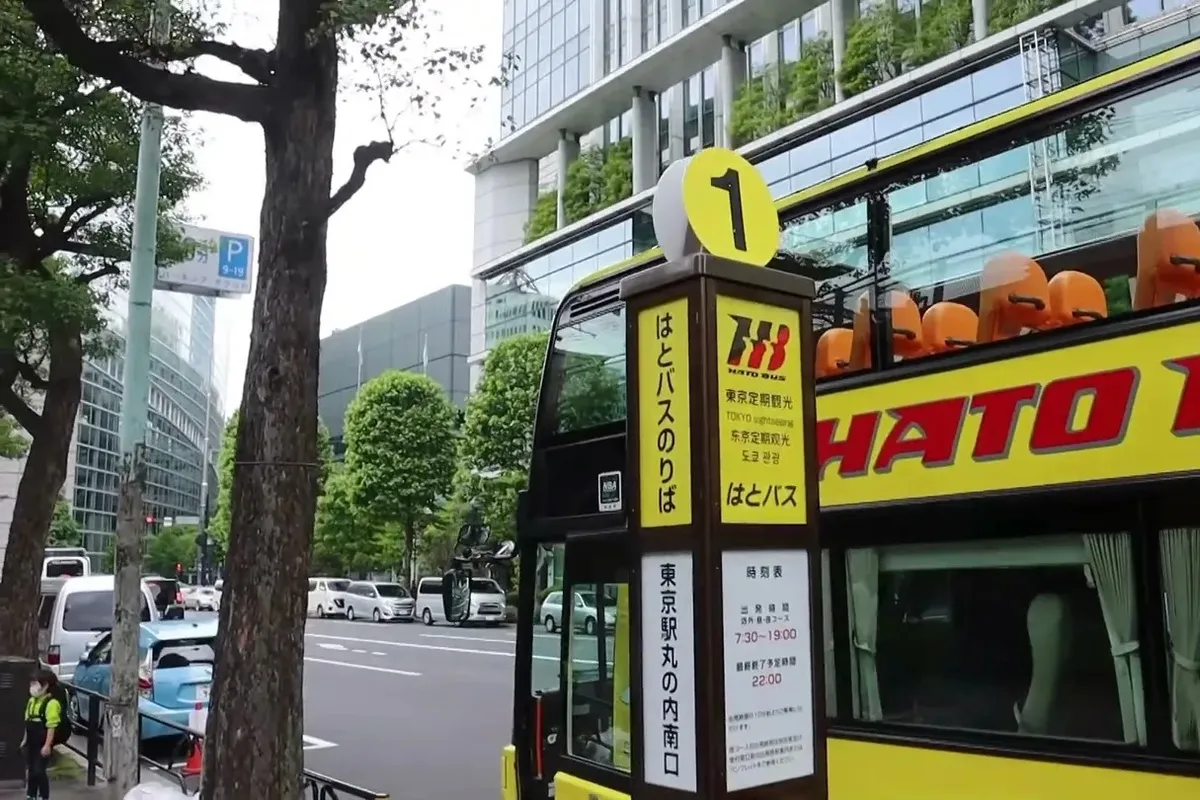
Traffic on Piccadilly had stopped, and the bus crawling past the Ritz was losing a race with pedestrians. Two rows ahead of me, a man on the top deck gave up photographing and filmed the roof of a parked delivery van instead. His 24-hour ticket had cost £36.99. No timetable tells you that, and no press release will. So this page keeps two things apart: what sightseeing operators publish, and what a rider gets for the money.
Eleven daytime open-top routes are compared here: London twice, Vienna, Amsterdam, Paris, Madrid, Edinburgh, Copenhagen, Rome, Singapore and Sydney. Dual-mode bus-and-boat passes count, because the road half works like any other hop-on service. I left out continuous non-stop panoramic rides, evening illumination loops, and airport shuttles. If a bus cannot get you from sight to sight during museum hours, it does not belong in the core table.
How These Eleven Routes Were Tested
Loop times and headways below are the operators' published figures, which are the optimistic version. Big Bus London prints 2 hours 30 minutes for its Red circle with buses every 15 to 20 minutes; on an April evening the buses bunched into threes and the gap between them stretched well past that window. My own records cover one complete loop per route, never a repeat run in different weather, so each city's timing is an impression with a source behind it rather than a measurement.
Fares come from the operator's own booking page, because the cheapest quoted rate moves with the date and the sales channel. The spread between the online rate and the full rate is wide enough to matter: Big Bus lists its London 24-hour Discover ticket at £36.99 online against a full price of £43.99, and its Vienna equivalent at €37.00 online against €39.00. Fares sold in local currency are converted at recent ECB reference rates, so the range across cities is readable at a glance.
Three things limit what these comparisons can carry, and they are worth stating before the table:
- One loop per route. A single road closure or stadium event can distort a city's result for the whole day.
- Season and weather. The rides behind this page ran across a damp April week in London and Edinburgh, a hot late-summer stretch in Madrid, Rome and Vienna, and a cold, wet trip to Copenhagen and Amsterdam.
- What I could not test. Wheelchair boarding, pet policies and child age bands come from the operators' own published rules, not from my rides.
Nothing here was photographed or filmed for publication, and no route was ridden twice to average out a bad day. Where a figure is missing, the operator does not publish it and I did not measure it. Brand-by-brand fleet and app performance sits in my comparison of Big Bus, City Sightseeing and Tootbus.
Ticket Mechanics: Rolling Hours, Calendar Days and Where the Money Leaks
The biggest money trap in this industry is the difference between a calendar-day ticket and a rolling 24-hour, 48-hour, and 72-hour pass. If you buy a standard One Day ticket in London for £32.00 at 14:00, your pass dies that same evening when the last bus pulls into the garage. Spend a few pounds more for a 24-hour pass (from £36.99 in London), and scanning your QR code at 14:00 today lets you ride until 13:59 tomorrow. The London Discover ticket also includes a one-way Thames cruise that the same-day ticket leaves out.
- Calendar-day pass: Expires at the end of service on day one. Only buy this if you board before 10:00.
- Rolling-hour pass (24h/48h/72h): The clock starts at your first scan. In Paris, Tootbus validates passes for 24, 48, or 72 rolling hours from boarding.
- Last full-circuit tour vs. last bus: Always check the first and last departure times. If a 2-hour loop lists its last full tour at 16:00, a bus arriving at Stop 4 at 17:00 is probably just heading back to the depot and will kick you off halfway round.
A sightseeing bus pass covers the ride only. As detailed on the official Big Bus London FAQ page, bus tickets do not include admission to monuments and will not give you skip-the-line access at places like the Tower of London or the Colosseum.
Most operators now let you skip paper entirely: you import your booking into the operator app or show a mobile barcode to the driver. Just do not assume child rules are the same everywhere–age cut-offs and family deals change wildly from city to city.
Fares, Loop Times and Headways Across Eleven Cities
The fares below are the cheapest adult online rate on each operator's own site, and the euro column converts them at recent ECB reference rates. Loop times and headways are the operators' published figures, which is why they assume a good day on the road.
| Operator and city | Cheapest adult fare (from) | Approx. EUR | Published loop time and headway | What the ticket covers |
|---|---|---|---|---|
| Big Bus, London | £32.00 same-day / £36.99 24-hour Discover | €38 / €44 | Red 2 h 30 every 15–20 min; Blue 3 h 35 every 20 min | Three routes, more than 20 stops on the Red circle; Discover adds a one-way Thames cruise |
| Tootbus (The Original Tour), London | £35.00 for 24 hours | €41 | Red 08:30–18:05 every 15–20 min; Blue every 20–30 min; Green and Pink hourly | Four routes, a hop-on Thames cruise and six self-guided walks |
| Big Bus, Vienna | €37.00 for 24 hours | €37 | Red 1 h 40 every 20–30 min; a second loop runs to Schönbrunn | Two city loops, commentary in nine languages; the 72-hour Explore adds a walking tour |
| City Sightseeing, Amsterdam | €35.00 bus and boat, 24 hours | €35 | Bus loop a little over an hour, every 25 min; boat loop about 2 hours, every 30–45 min | 9 bus stops and 8 boat stops, audio in 18 languages, free cancellation up to 24 hours ahead |
| Tootbus, Paris | €44.10 for 24 hours | €44 | Single blue route, 09:30–18:30, every 8–15 min | 10 stops; rolling 24/48/72-hour validity from the first scan; infants 0–3 free |
| Big Bus, Singapore | US$53 for one day | €47 | Yellow 90 min every 25–40 min; Red 60 min every 25–35 min | Two lines from the Suntec City hub; the two-day Essential sells for US$55 |
| Big Bus, Sydney | AU$75 for 24 hours | €46 | City 1 h 30 every 30–40 min; Bondi 1 h 20 every 35–45 min; last full circuit 17:00 | Harbour and Bondi loops on one ticket, more than 30 stops |
| City Sightseeing, Madrid | €29.70 online, €33.00 at the counter | €30 | Three connected lines, 34 stops | 24-hour hop-on hop-off; the 48-hour version is €39.60 online; children 4–12 pay €18 |
| City Sightseeing, Edinburgh | £20.00 per adult, up to three children free | €24 | Single 70-minute loop every 10–15 min, 08:45–18:00; winter service every 20 min | 15 stops between the New Town and Holyrood, commentary in 10 languages |
| Stromma, Copenhagen | DKK 279 for 24, 48 or 72 hours | €37 | Red 1 h 30 every 45 min; Green and Purple run 2–3 times a day | Three lines, more than 20 stops, audio in 14 languages; under-6s ride free |
| Big Bus, Rome | €29.00 for 24 hours (3-hour Taster €23.00) | €29 | Single Red route, about 103 minutes | 8 stops including Termini, the Colosseum, Circus Maximus and the Vatican |
Converted like that, the eleven one-day fares sit between about €24 in Edinburgh and €47 in Singapore, a two-to-one spread that owes more to local labour and fuel costs than to quality. Per stop, the order flips. Madrid's €29.70 online fare spreads over 34 stops at roughly 87 cents each, Edinburgh's £20 over 15 stops at about €1.60. Rome is the other extreme: eight stops for €29.00, or €3.63 each, because the loop cannot enter the historic centre at all. Per hour of published route, Singapore is the outlier at close to €19 an hour for its two and a half hours of Yellow and Red loops, against roughly €11 an hour for Amsterdam's bus and boat. That does not make the Singapore ticket poor value; it makes it a ticket worth spreading over two days.
Route by Route: What Each Operator Actually Delivers
Big Bus London: Runs three routes: the Red Loop (approx. 2 hours 30 minutes) for central heavy hitters, the marathon Blue Loop (approx. 3 hours 35 minutes) stretching from Kensington to the Tower, and the Green Link connecting King's Cross St. Pancras. Buses arrive every 15 to 20 minutes on the Red Loop and every 20 minutes on the Blue, and the stops I have used most are Green Park, Trafalgar Square and Tower Hill. More detail on stops and fares sits in my review of the Big Bus London routes.
Tootbus London: Four routes rather than three. The Red Route runs 08:30 to 18:05 every 15 to 20 minutes, the Blue every 20 to 30 minutes, and the Green and Pink connectors only once an hour, which makes them useless for getting around. Buses are branded The Original Tour, and the six self-guided walks live in the POP GUIDE app because Tootbus does not run an app in London.
Big Bus Vienna: Two clean circuits on 20 to 30-minute headways. The Red Route takes 1 hour 40 minutes around the Ringstraße and out to the Danube, while the second loop runs to Schönbrunn Palace. Commentary is pre-recorded in nine languages, and the first bus from Opera/Walfischgasse leaves at 09:30.
City Sightseeing Amsterdam: Combines a nine-stop perimeter bus route (10:00–17:00, buses about every 25 minutes) with a canal boat network (09:30–17:45 from Central Station East) whose full circle takes roughly two hours. The bus is routed around the edge of the centre because city rules keep large vehicles out of the historic streets; the boat is what carries you through the canal ring itself. Both stand down for King's Day on 27 April.
Tootbus Paris Discovery: One blue route, ten stops, starting at Opéra. First departure is 09:30 and the last full tour leaves at 18:30, with buses every 8 to 15 minutes, the tightest headway in this set. Commentary runs in ten languages on the onboard devices and in the app, with a separate children's channel in English and French, and earphones are handed out at the door.
Big Bus Singapore: Operates out of Suntec City Tourist Hub. The Yellow Line (City Tour, 90 minutes) runs every 25 to 40 minutes past Marina Bay, the Botanic Gardens and Orchard Road, and the Red Line (Heritage Tour, 60 minutes) every 25 to 35 minutes through Chinatown, Little India and Kampong Glam.
Big Bus Sydney & Bondi: Two daytime routes on one ticket: the harbour-focused City Tour from Stop 1A on Phillip Street (first bus 09:00) and the coastal Bondi loop (first bus 09:20, reaching Bondi Beach at 10:00). Both finish early, with the last full circuit leaving Stop 1A at 17:00, which is why the afternoon is the wrong time to start.
City Sightseeing Madrid: 34 stops spread across three connected lines, including the Bernabéu stadium on the modern route. Fares are published in full on the Madrid City Tour official rate page, and the operator currently has its night tour closed for the season, which is worth knowing before you plan an evening ride.
City Sightseeing Edinburgh: A single 70-minute loop from Waterloo Place, 15 stops, buses every 10 to 15 minutes through the day and every 20 minutes on the winter timetable. Commentary comes in ten languages, including a Horrible Histories channel for children, and up to three children travel free with each adult. Stop-level detail is in my Edinburgh practical guide.
Stromma Copenhagen: Three lines on one ticket. The Red Line (Classic Copenhagen) takes 90 minutes and runs every 45 minutes, with the last full tour leaving Tivoli at 15:35 and Ved Stranden at 16:00. The Green Line (Carlsberg, Frederiksberg and Vesterbro) departs Tivoli twice a day, at 12:00 and 14:00, and takes 45 minutes; the Purple Line (Christianshavn and Refshaleøen) takes 55 minutes and leaves Tivoli at 10:45, 12:45 and 14:45. The ticket is valid on Stromma's green buses and on the red Copenhagen City Sightseeing buses, which are the same operation in two liveries.
Big Bus Rome: Keeps things simple with a single Red Route. As shown on the official Big Bus Rome Red Route map, the circuit covers Stops 1 through 8–including Termini, the Colosseum, Circus Maximus, and the Vatican–in about 103 minutes.
Traffic, Stop Placement and the Timetable's Blind Spots
No double-decker sightseeing bus gets a lane of its own, and published loop times assume a good day. London's Blue circle is the clearest case: it threads Kensington, Park Lane, Whitehall and the Strand over three and a half hours, so one incident on any of those stretches pushes every downstream stop late. Late buses then bunch up, which is worse for a hop-on rider than evenly spaced slow ones.
- Service alerts come first. Operators drop stops for street works, marathons and state visits, and the change appears on the service page rather than the timetable. Vienna suspends Ring stops for events and roadworks several times a year, and Singapore closes the roads around the Padang for the Marina Bay street circuit each autumn.
- The live map beats the printed timetable. Big Bus and Tootbus track their vehicles by GPS in their apps, and the Amsterdam and Copenhagen operations publish live maps as well. A visible twenty-minute gap on that screen is an argument for coffee rather than standing at the kerb.
- Know your cut-off. Sydney's last full circuit leaves Stop 1A at 17:00, and Copenhagen's Red Line runs its final complete loop from Tivoli at 15:35. A bus that turns up at a mid-route stop after that may be heading back to the depot.
Where the Bus Stops, and Who Can Actually Board
Big double-deckers are heavy, wide, and banned from historic pedestrian zones. In Rome, the 8-stop Big Bus loop skirts the outside of the Centro Storico, meaning you still have to walk through crowded cobblestone alleys to reach the Trevi Fountain or the Pantheon. In Edinburgh, the bus sets you down on George IV Bridge or Johnston Terrace, and the last stretch to the Castle esplanade is a steep climb over cobbles.
Cruise passengers should check where the route actually starts. As noted on the official City Sightseeing Edinburgh page, buses do not pick up inside the cruise port; you need a local shuttle or tram to reach the city centre stop first.
Boarding rules differ by city more than the brochures admit. Stromma publishes a clear limit for Copenhagen: its buses cannot carry a wheelchair user who cannot transfer to a seat, a folded wheelchair goes aboard at the driver's discretion, and the canal boats are not accessible at all. City Sightseeing Amsterdam accepts wheelchair users who can board and leave the bus unassisted, and states that the boat is not accessible. Pet rules are just as uneven. London operators allow registered assistance dogs, and Stromma's Copenhagen buses take dogs up to 5 kg in a carrier, on the top deck.
Roofs, Rain and Audio: What Decides a Comfortable Ride
Sitting four metres above the street gives you the best camera angles in the city, but the open deck is exposed to whatever the sky is doing. On a hot afternoon in Madrid or Singapore, the unshaded plastic seats bake, and the breeze you had while moving disappears the moment the bus stops at a red light.
Rain is the opposite problem. At Copenhagen's Little Mermaid stop the sky opened mid-loop, and fifty people on the upper deck came down the spiral stairs at once into a lower saloon that also holds the driver's cab, the wheel arches and the wheelchair bay, so it has roughly half the seats of the top deck. Once you are downstairs you are looking at the city through steamed glass. What rescues that ride is a roof: Stromma's Copenhagen buses have a regular or sliding roof that closes when it rains, plus heating for the winter, and City Sightseeing Edinburgh fits a canopy to every bus. Roof type is worth checking before booking a winter or shoulder-season ticket, and the fleets that handle wet weather best are compared in my guide to all-weather hop-on hop-off tours.
Commentary has moved onto phones. Tootbus streams its GPS audio guide through the app in Paris while still handing out free earphones on board, and City Sightseeing Amsterdam gives you earphones to keep and reuse when you reboard, in 18 languages. Stromma's Copenhagen buses carry the City's Voice app in 14 languages, with earphones offered before departure. Running the live bus map and streamed commentary at the same time is what empties a battery: on the Amsterdam loop, with the map open and the audio playing, my phone hit a low-battery warning before the second hop-off. A power bank earns its place, and the onboard Wi-Fi is no substitute, because it drops out between stops.
Sightseeing Pass or Municipal Transit? The Arithmetic
Vienna gives the cleanest comparison, because its public transport is flat-fare and the numbers are small. A 24-hour Wiener Linien ticket costs €9.70 in the WienMobil app or the online shop, and about €10.20 for a paper ticket from a machine, and it covers the U-Bahn, trams, buses and the S-Bahn inside the core zone. Big Bus Vienna charges €37.00 online for its 24-hour Discover ticket, roughly four times as much.
The old shortcut of buying a 48-hour or 72-hour municipal pass no longer exists. Wiener Linien abolished both at the start of 2026, and its current range runs from a single journey through 24 hours, 7 days, 31 days and the annual pass. For two or three days in Vienna you buy two 24-hour tickets (€20.40 printed, €19.40 digital) or the 7-day pass at €28.90 printed and €25.20 digital, which undercuts the 48-hour Big Bus Essential at €42.30 before the bus has moved.
So what does the extra €27 buy? A guaranteed seat on an open top deck, recorded commentary in nine languages, and one continuous ride out to Schönbrunn instead of a U4 trip plus a walk from the station. The Ring boulevard itself is served by ordinary trams that cover the same arc past the State Opera, the Hofburg and Parliament for the price of a day ticket. If you want the same arithmetic for other cities, the cost and speed comparison of hop-on buses against public transit runs it city by city.
Combos, Family Fares and Three Upgrades to Skip
Amsterdam is where bundling pays. City Sightseeing sells a 24-hour bus-only pass at €27.50 and a boat-only pass at the same price; the bus-and-boat combination is €35.00 online, so €7.50 extra puts you on the canals, and buying the two modes separately would cost €55. The catch is the clock: buses finish at 17:00 and boats run until 17:45, so the last three quarters of an hour are boat-only, and free cancellation closes 24 hours before you travel.
Edinburgh is the family anomaly in this set. City Sightseeing charges £20.00 per adult and lets up to three children ride free, which makes a family of four cheaper than one adult ticket in Sydney or Singapore. Copenhagen splits the difference: under-6s travel free, children 6 to 15 pay half, and the Bus & Boat ticket at DKK 409 adds a one-hour canal tour to the bus ticket. In Paris, Tootbus prices a family ticket (two adults and two children) at €112.50 against €125.00 for the same seats bought separately. Ways to mix boat, bus and attraction tickets are compared in my guide to bus and river cruise combinations, and routes that survive a day out with children are covered in the family-friendly shortlist.
Three upgrades in this set are hard to justify. In Rome, the three-hour Taster costs €23.00 while the full-day One Day ticket is €25.00 on the same booking page, so two euros buys you the rest of the day: I took the Taster on a first visit to have a look at the route, and spent the afternoon buying single metro tickets instead. In Singapore, the 1-Day Discover is US$53 and the 2-Day Essential is US$55, which makes the second day almost free. In Copenhagen, the Green and Purple lines depart two and three times a day respectively, so they behave like scheduled excursions rather than transport; buy the ticket for the Red Line and treat the others as a bonus.
Eleven Cities, Eleven Verdicts
London, Big Bus. Buy the 24-hour Discover rather than the same-day pass: the cruise comes with it, and the clock starts at your first scan rather than at midnight. The Red circle does the real work; the Blue is a long, traffic-heavy ride out to Kensington. Worth it if you board before 14:00. Book online rather than at the kerb, because the full rate is £7 higher than the online rate.
London, Tootbus. The same streets with the river cruise and the walking tours already inside the ticket, and a quieter top deck on the routes that matter. The hourly Green and Pink connectors are there to link stops, not to carry you around. Worth it for anyone who wants the boat included; otherwise Big Bus has the tighter frequency on the Red Loop.
Vienna. The most expensive ticket per hour of route in this set, running through a city with one of Europe's best tram networks. Worth it once, for the run out to Schönbrunn with commentary in your ears; not worth it as everyday transport, and the 72-hour Explore only makes sense if you plan two full sightseeing days.
Amsterdam. Buy the bus-and-boat combination or neither. The bus circles the centre instead of entering it, while the boat goes exactly where the streets cannot, and the pair together costs less than the two single-mode passes bought separately. Worth it, with the timetables checked first so the boat half fits your day.
Paris. Rolling validity from the first scan turns this into a two-day city break ticket rather than a one-day one, and the eight-minute headway means you rarely wait. It is also the priciest ticket here per stop. Worth it if you plan to hop off four or five times around the Louvre, Orsay, Notre-Dame and the Eiffel Tower.
Madrid. Cheapest per stop of the eleven, and the only one where the outer line carries the ticket on its own, because the Bernabéu loop does something no metro card can. Skip it for the old centre, which you will walk anyway, and remember the night tour is paused for the season.
Edinburgh. The best-value ticket in the set for a family, on a loop short enough to ride twice in an afternoon, with commentary that keeps children listening. Worth it, particularly in a wet week when the alternative is walking up cobbles in the rain.
Copenhagen. Off season this is a 90-minute Red Line with a bus every 45 minutes and nothing else running, so the ticket buys orientation rather than transport. Worth it on your first morning while you work out what to walk to; poor value on a two-day trip where the metro and harbour buses do the moving.
Rome. The loop circles the historic centre rather than entering it, so the Colosseum and the Vatican come with a bus ride and the Trevi Fountain, Pantheon and Piazza Navona come with a walk. Worth it if the Catacombs or the Appian Way are on your list; otherwise keep the money and cross the centre on foot, which takes about half an hour.
Singapore. Take the two-day pass, ride the Yellow Line in the morning for Marina Bay and the Botanic Gardens, and treat the Orchard Road stretch as air-conditioned downtime. Worth it as transport between the gardens, the museums and Chinatown; uncomfortable on the open deck at midday, so sit downstairs then.
Sydney. Two routes, one ticket, and a coastline that is genuinely awkward to reach by suburban bus, which is where the value sits. The early finish is the trap: on the first buses at nine it is worth it, on a half-day starting after lunch it is not.