

Paying $62 for a 24-hour bus pass in a city where the subway costs $3.00 a ride sounds crazy on paper. Yet after riding open-top buses across sixty routes worldwide, I know this Big Bus New York review comes down to a simple trade-off: are you paying to get from point A to point B, or are you paying for a moving second-story balcony down Fifth Avenue? If you expect fast city transport, Manhattan gridlock will chew up your afternoon and spit you out frustrated.
If you treat the NYC hop-on hop-off bus as an open-air architecture ride and time your boarding right, it saves your feet and gives you views you simply cannot get from an underground subway car or the back of a yellow cab. Let’s look at the actual wait times, route math, and ticket fine print so you can decide if it belongs in your budget.
Boarding Logistics: Finding Stop 1, Transit Connections, and Bus Policies
Locating the Times Square Hub and Transit Access
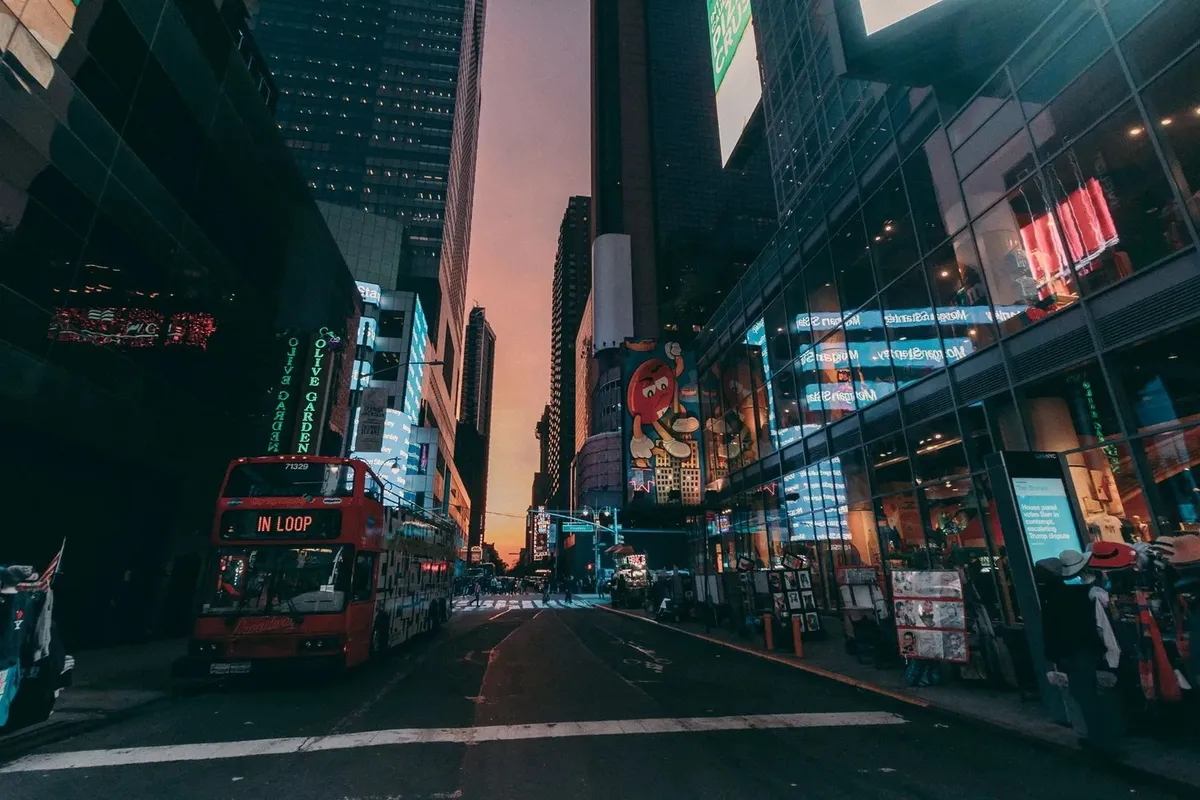
Everything on the main circuit starts at the Times Square bus stop hub. Stop 1 is right outside M&M’s World at the intersection of 7th Avenue and West 48th Street. The first bus rolls out at 9:00am, and if you want a front-row seat on the upper deck without waiting through two loading cycles, that is the exact departure you should aim for.
Getting to M&M’s World Stop 1 by public transit is easy and takes two minutes on foot from the nearest underground exits:
- 49th Street Station (N, Q, R, W trains): Use the exit at 47th–49th Streets and 7th Avenue to walk straight to the boarding line.
- 50th Street Station (1 train): Exit at Broadway and West 50th Street, then walk two short blocks south and one block east.
- 50th Street Station (C, E trains): Exit at 8th Avenue and walk one avenue block east along West 48th Street.
Do not drive a rental car into Midtown to catch this tour. Between crosstown gridlock and local parking garages charging $25 to $60+ per day, bringing a car to Times Square is a miserable way to start a morning.
Boarding Protocols, Luggage Rules, and Accessibility Realities
Before you walk up to the curb, know that Big Bus runs a tight ship on what and who comes aboard. You cannot use an NYC open-top double-decker bus as an airport transfer or a rolling luggage locker between hotel check-out and a late flight. The crew enforces a strict zero-luggage policy, meaning suitcases and oversized backpacks are turned away at the door.
If you are traveling with kids or mobility gear, keep these rules in mind:
- Big Bus New York child ticket policy: Children aged 2 and under ride free, kids aged 3 to 12 need a child ticket, and anyone under 15 must ride with an adult aged 15 or older.
- Strollers: You have to fold strollers flat and store them on the lower deck before climbing the stairs.
- Wheelchair access: The New York bus tour accessibility setup covers the whole fleet with power lifts rated up to 650 pounds.
Keep in mind that wheelchair spaces are on the enclosed lower deck only, so passengers who cannot climb the narrow curve of stairs will not have access to the open upper deck. If you need extra assistance, contact Big Bus at least 48 hours before your trip–and remember that the operator cannot guarantee step-free access inside the city landmarks along the route.
Big Bus New York Routes: Navigating the Downtown Manhattan Bus Tour and Uptown Loops
The Downtown Loop Red Route: Stops, Sights, and Duration
When most people picture Big Bus New York routes, they are thinking of the Downtown Loop red route. This is the heavy hitter of the system, running 13 stops from Midtown down to the southern tip of Manhattan and back up the west side. Buses leave Stop 1 at 9:00am, run every 30 minutes, and finish with the last full circuit departing Stop 1 at 4:30pm.
| Stop Area / Landmark | Neighborhood & Key Access |
|---|---|
| Stop 1: M&M's World / Times Square | 7th Ave & W 48th St (Primary boarding hub) |
| Times Square East / Koreatown | Midtown access & Empire State Building |
| Flatiron District | 5th Ave architecture & Madison Square Park |
| SoHo | Cast-iron historic district & shopping |
| Chinatown / Little Italy | Canal St & Mulberry St dining |
| Brooklyn Bridge | City Hall & pedestrian bridge walkway entrance |
| Wall Street / Statue of Liberty | Financial District & Battery Park ferry area |
| Trinity Church | Historic parish & Broadway canyon |
| World Trade Center | 9/11 Memorial & One World Observatory |
| Chelsea / Pier 57 | High Line south access & Chelsea Market |
| Hudson Yards | The Vessel, Edge & High Line north end |
| Circle Line Sightseeing | Pier 83 Hudson River cruise terminal |
A non-stop lap on this Downtown Manhattan bus tour takes about 90 minutes in normal traffic. Look at the clock, though: with a 7.5-hour operating window and a 30-minute wait every time you hop off, you cannot get off at all 13 stops in one day. If you hop off three times–say, at the Brooklyn Bridge stop and the Wall Street and World Trade Center stops–you will spend 90 minutes on the bus and another 90 minutes waiting at the curb. Pick two or three stops max, and ride the rest as a continuous loop.
Uptown Blue Route Inclusions and the Evening Tour Experience
The Uptown Loop blue route is a much sleepier affair. It starts at Stop 14 by the Hope Sculpture (7th Avenue and West 53rd Street), heading past Central Park, Columbus Circle, and Museum Mile. The catch is the schedule: buses only run from 10:00am to 4:00pm, and they depart once every 60 minutes.
| Feature | Uptown Loop (Blue Route) | Big Bus New York Night Tour |
|---|---|---|
| Format | Daytime hop-on hop-off loop | Non-stop panoramic evening ride |
| Departures | 10:00am – 4:00pm (from Stop 14) | 7:00pm and 8:00pm (from Stop 1) |
| Frequency | Every 60 minutes | Fixed evening departures (arrive 30 mins early) |
| Duration | Approx. 75 minutes | Approx. 2 hours |
| Commentary | Pre-recorded digital audio (6 languages) | Live English-speaking guide |
Miss an Uptown bus by two minutes, and you are standing on the sidewalk for nearly an hour. I treat the Blue Route strictly as a single 75-minute seated ride rather than a hop-off line. Similarly, do not confuse the Big Bus New York Night Tour with night transport. It is a 2-hour continuous panoramic drive with no hopping off, featuring an English-speaking live guide instead of recorded audio. For a smart way to split these loops across two days, check my 48-hour strategic route split.
Onboard Experience: Traffic Delays, Real Wait Times, and Bus Comfort
Scheduled Frequency vs. Mid-City Congestion Realities
Brochures promise a 30-minute NYC sightseeing bus frequency on the Red Route and 60 minutes on the Blue Route, as listed on the Big Bus Service Information page. On a quiet Tuesday morning, they hit those marks. On a Friday afternoon in Midtown, NYC bus tour traffic delays turn the schedule into wishful thinking.
| Route | Scheduled Frequency | Heavy Congestion Wait Time | Scheduled Loop Time |
|---|---|---|---|
| Downtown (Red) | Every 30 minutes | 40 – 55 minutes | Approx. 90 minutes |
| Uptown (Blue) | Every 60 minutes | 75 – 90 minutes | Approx. 75 minutes |
During United Nations General Assembly weeks or the November–December holiday rush, the city designates official NYC DOT Gridlock Alert Days when Midtown traffic crawls below 4 mph. Once, sitting in bumper-to-bumper traffic near 5th Avenue while delivery trucks blocked the curb lane, I watched walkers on the sidewalk outpace our bus for six straight blocks.
Buses run daily except on Thanksgiving and December 31, though heavy storms or parades can shut down streets at short notice. For a broader look at how different operators handle Manhattan avenues, read my New York City sightseeing bus guide.
Pro Tip: Never walk blindly to a bus stop in Manhattan. Open the Big Bus New York app live tracking map before leaving a museum or café so you can watch the actual GPS pins move and avoid standing in diesel fumes for 45 minutes.
Comfort Levels, Upper-Deck Exposure, and Audio Systems
Riding an NYC open-top double-decker bus is all about the upper deck. Downstairs feels cramped, smells faintly of wet umbrellas on rainy days, and gives you a lovely view of city bus tires and delivery vans. Upstairs gives you clean sightlines of the Empire State Building and the Flatiron cornice, but there is zero shelter from the weather.
In July and August, the unshaded plastic seats bake under the sun when the bus stalls at red lights. In winter, the wind chill whipping across the Hudson River near Pier 57 will numb your fingers in ten minutes. Dress as if you are standing on an open ferry deck, not sitting in a tour coach.
For the daytime loops, the driver hands out free wired earbuds that plug into a 3.5mm jack on the seatback ahead of you. The pre-recorded commentary runs in six languages: English, Spanish, French, German, Italian, and Portuguese. If you bring your own wired headphones with good noise isolation, use them–the cheap freebie earbuds struggle to drown out Manhattan sirens and jackhammers. If you want to compare how local rival fleets handle audio and seating, check my TopView Sightseeing NYC review.
Big Bus NY Ticket Prices, Package Inclusions, and Subway Comparisons
Ticket Tiers: Discover, Essential, Explore, and Add-On Cruises
When comparing Big Bus NY ticket prices, pay close attention to what is missing from the cheapest pass. The entry-level 24-hour Discover ticket starts at $62 (full price from $65), and it only covers the Downtown Loop. You do not get the Uptown Loop or the Night Tour on a Discover pass.
| Ticket Tier | Duration | Online Price (From) | Full Price (From) | Included Routes & Add-Ons |
|---|---|---|---|---|
| Discover | 24 Hours | $62 | $65 | Downtown Loop (Red Route) only |
| Essential | 48 Hours | $83 | $87 | Downtown + Uptown Loops + 2-hr Night Tour |
| Explorer | 48 Hours | $99 | – | Downtown + Uptown + Night Tour + Circle Line Cruise |
| Explore | 72 Hours | $99 | $208 | Downtown + Uptown + Night Tour + Circle Line Cruise |
| Night Tour | ~2 Hours | $67 | $69 | Evening non-hop-on tour with live guide |
If you want both loops and the evening drive, step up to the 48-hour Essential ticket at $83 (full price from $87). However, the smartest math on the board is the 72-hour Explore ticket (or 48-hour Explorer) starting at $99. For an extra $16 over the Essential pass, you get an extra day of bus access plus a Circle Line cruise combo (your choice of the Liberty or Landmarks boat cruise). Just remember: after buying an Explore pass, you must log into the Big Bus booking portal to lock in your Night Tour date and select your Circle Line cruise before showing up at the pier.
Hop-On Hop-Off Bus Value vs. the MTA Subway
Let’s do the blunt math on the NYC bus tour versus subway debate. Since January 4, 2026, the base MTA subway and local bus fare is $3.00 per ride. Even better, if you tap the same contactless bank card or phone at the OMNY turnstile reader, your spending is capped at $35 for an entire 7-day rolling period.
Here is how the numbers stack up for two adults spending two days in Manhattan:
- Big Bus 48-Hour Essential (2 Adults): 2 × $83 = $166.00 total.
- MTA Subway (2 Adults taking 4 rides per day for 2 days): 2 × 8 rides × $3.00 = $48.00 total.
- MTA Subway (2 Adults riding unlimited for a full week via OMNY): 2 × $35 = $70.00 total.
The subway is immune to surface traffic, runs every few minutes, and costs $118 less for a couple over a weekend. Never buy a Big Bus ticket thinking it will save you money on transportation. Buy it only if you value sitting outside in the fresh air, looking up at skyscrapers, and having someone narrate the history while you rest your legs.
Ticketing Logistics: Digital Activation, App Tracking, and Cancellation Terms
Purchasing Channels and App Ticket Activation
You can buy passes online through the website, via the mobile app, from hotel concierges, or straight from the uniformed street staff standing around Times Square. I always buy online or in the app to get the $62 to $99 promotional tiers rather than paying full walk-up rates on the sidewalk, and to avoid the aggressive third-party ticket sellers in brightly colored vests who swarm tourists near 42nd Street.
Warning – Do Not Activate Early: Digital timed tickets (24, 48, or 72 hours) must be activated in the Big Bus app on your date of travel. The moment you tap activate, the countdown clock starts ticking non-stop. You cannot pause the timer, reset it, or transfer the activated pass to another person's phone–so wait until you are standing at the stop ready to board.
Once activated, the app generates a QR code that the curb agent or driver scans as you step onto the lower deck. Keep your phone charged; if your battery dies mid-afternoon, you cannot transfer that live digital pass to your partner's phone to re-board down in SoHo.
Change Flexibility, Booking Rules, and Cancellation Reality
When it comes to Big Bus New York ticket activation and date changes, read the fare rules before you pay. Standard discounted tickets lock you into your chosen date, and changing that date later triggers fee surcharges or gets rejected outright if the pass is already active.
If you are booking weeks ahead and worry about rain, upgrading to a Fully Flexible ticket lets you move your travel date for free prior to activation. Keep your expectations realistic regarding refunds: standard tickets are non-refundable once confirmed, and a grey, drizzly morning in Manhattan does not qualify you for your money back unless Big Bus suspends operations across the whole city. For a deeper breakdown of how operators structure these fare tiers, see my tour bus ticket pricing playbook.
Big Bus New York Review: Final Verdict and Traveler Recommendations
Who Gets the Greatest Value from Big Bus New York
Despite the Midtown traffic jams, I still recommend this tour to specific travelers who use it the right way. You will get your money's worth if you fit one of these profiles:
- First-time visitors on Day 1: Riding the full 90-minute Downtown Loop from M&M's World down to Battery Park and back gives you an immediate visual map of how Manhattan's neighborhoods connect.
- Travelers saving their steps: New York easily demands 15,000 to 20,000 steps a day; sitting on the upper deck for two hours gives tired knees, seniors, and families with kids (aged 3+) a break without retreating to a hotel room.
- Package bundlers: Buying the $99 Explore (72-hour) or Explorer (48-hour) pass to combine the daytime loops, the live-guided Night Tour, and a Circle Line boat cruise delivers genuine value compared to buying three separate sightseeing tickets.
When to Skip the Bus: Limitations, Drawbacks, and Smarter Alternatives
On the flip side, save your $62 to $99 and head straight for the subway turnstiles if any of these apply to your trip:
- You have timed-entry museum or observatory tickets: Never rely on a bus with 30-to-60-minute intervals and street traffic to make a reserved slot at the 9/11 Museum or Empire State Building. Take the subway for $3.00.
- You are carrying bags: If you have checked out of your hotel and have a suitcase in tow, the driver will not let you board.
- It is pouring rain, freezing cold, or a Gridlock Alert Day: Sitting on the enclosed lower deck in a traffic jam removes 90% of the fun of an open-top tour.
What to Check Before You Go:
- Check the Big Bus ticket calendar for your exact travel date, as daily rates fluctuate above the $62–$99 starting prices during peak periods.
- Verify same-day route changes or parade detours on the Service Information page or mobile app before heading to a stop.
- Confirm the exact evening departure times (7:00pm or 8:00pm) for the Night Tour on your date, and arrive at Stop 1 at least 30 minutes early.
- Use the Big Bus booking portal immediately after purchase to reserve your Night Tour date and Circle Line cruise if you buy an Explore or Explorer pass.