

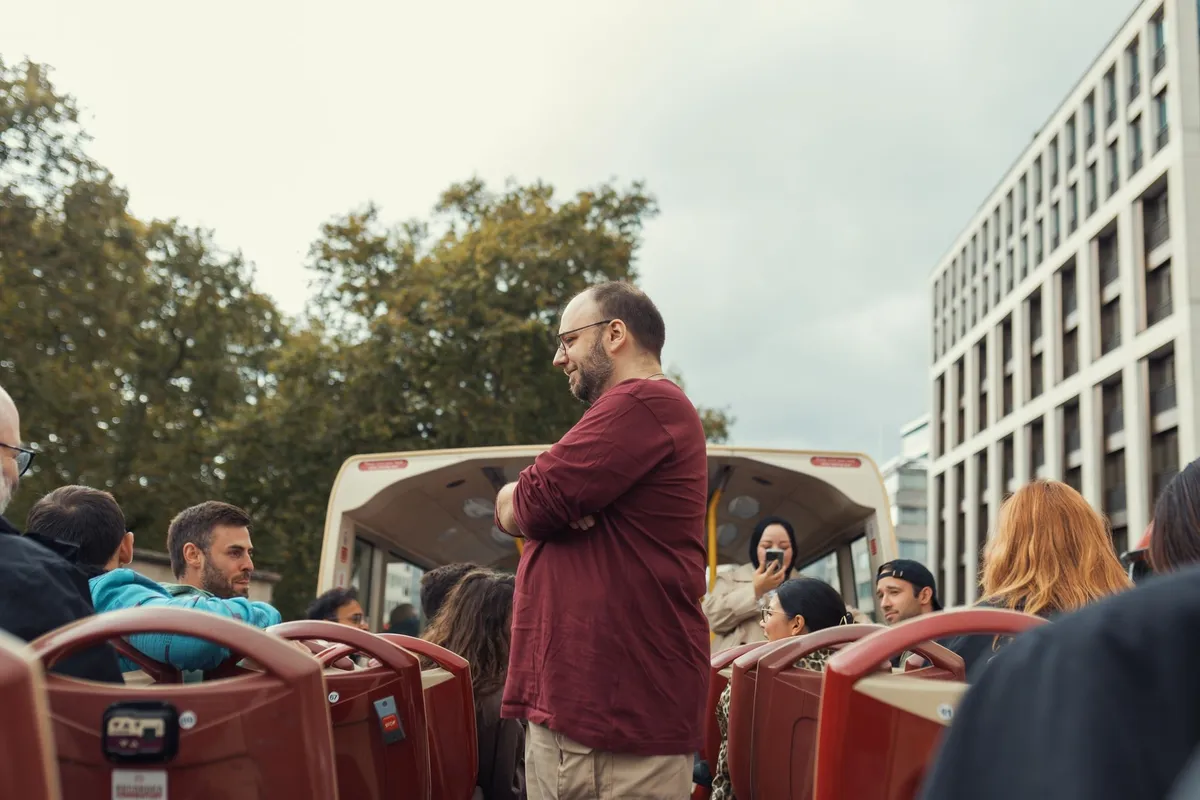
Two things strand people at the kerb before a sightseeing bus has moved: a ticket whose clock has already started, and a suitcase the driver will not take. Both are settled before you reach the stop. Big Bus issues tickets through its app, so you add the booking reference, open the ticket on the day and press "Activate", and the countdown begins at that moment rather than at purchase. Tootbus counts from first validation on board, and its tickets can be exchanged or cancelled free of charge up to 24 hours before the tour date, which leaves room to move the day if the forecast turns.
Sightseeing loops do one job well: they connect sights spread across a city centre, with recorded commentary, while you sit down. They do other jobs badly. Big Bus New York says plainly that luggage is not permitted on board, and its Downtown Loop stops running at 16:30, so the bus makes a poor station transfer or late-afternoon taxi.
Ticket clocks and fares
When the 24 hours actually start
A rolling 24-hour pass and a calendar-day ticket look alike on a booking page and behave very differently in a city. Tootbus states that its ticket is valid for 24, 48 or 72 hours from first validation on the bus, so a pass first scanned at 14:00 on Tuesday still works at 13:00 on Wednesday. A same-day ticket is the other animal. Big Bus London sells a cheaper one, from £32.00 online against £39.00 at full price, and prints the condition in bold: valid on the day of purchase only. I bought that version once, on a Saturday when I boarded at half past four, and it died with the last bus while the evening was still going; the 24-hour ticket would have carried me into Sunday morning, and that is the one I take now.
The mistake costs hours because last departures come earlier than most visitors expect. Tootbus Paris leaves Opéra for the last time at 18:30 in the autumn timetable and at 17:00 from early November. Big Bus London's last full-circuit run on the Red Route leaves Stop #2 at the Hard Rock Cafe at 17:45. Anyone who wants the whole loop should work back from that time, which is why a mid-afternoon activation rarely pays.
| City and operator | Ticket | Adult price | Running hours |
|---|---|---|---|
| London, Big Bus | 24-hour Discover, one-way Thames cruise included | £36.99 online, £43.99 at the stop | Red Route 08:30 to 17:45, full circuit about 2 hours 30 |
| Paris, Tootbus | Paris Discovery, blue route, 1 to 3 days | €44.10 online, €49.00 at the stop | 09:30 to 18:30 in autumn, 09:30 to 17:00 from early November |
| Rome, City Sightseeing | Integrated 24-hour ticket with the Omnia yellow line | from €18.00 | Full circuit about 1 hour 30 |
| New York, Big Bus | 24-hour Discover, Downtown and Uptown loops | $62.00 online, $65.00 at the stop | Downtown Loop 09:00 to 16:30, every 30 minutes |
Buying online is the cheaper route with every one of these operators, and the gap is worth checking before you walk up: £7.00 in London, €4.90 in Paris and $3.00 in New York for the same seat on the same bus. Duration changes the sums again, since the step from a 24-hour to a 48-hour pass is usually smaller than the price of the first day, and the way 24, 48 and 72-hour passes are priced is worth working through before you commit to a duration.
An online ticket buys validation, not a seat. On hop-on, hop-off loops you board the next bus that has room, and Big Bus notes that some tours ask you to choose a travel time when booking to secure your place.
Digital tickets, vouchers and what to keep on your phone
Where you buy decides what you show at the door. Booking with the operator puts the ticket in its app, where the driver or a stop staffer scans it; Tootbus delivers tickets by email and requires the holder to validate before each journey. Buying through a hotel concierge or a reseller adds a step, because the voucher has to be exchanged for the operator's own ticket before you board. Big Bus flags certain fares as fully flexible, Tootbus and City Sightseeing Rome both allow free amendment or cancellation until 24 hours before the tour, and none of them replaces a lost ticket. Open the ticket in the app while you still have hotel wifi, check that the barcode loads without a signal, and keep the booking reference somewhere you can find it without scrolling through email.
Timing: circuits, traffic and the first loop
Ride the whole loop before you get off
One morning of discipline changes how the rest of the trip works: board the first departure and stay on for the complete circuit without getting off. You pick up the shape of the city in a single pass, you learn which stops collect crowds, and you choose your afternoon from what you have seen rather than from the route map. Operators publish the circuit time, and the spread is wide. Big Bus London's Red Route takes about 2 hours 30, its Blue Route about 3 hours 35 and the Green Link about 1 hour 10, while the City Sightseeing loop in Rome runs about 1 hour 30. On the Paris blue route, departures come every 15 minutes in autumn and every 7 to 10 in high summer, so a missed bus costs you very little. Two or three days of loops need an order as well as a ticket, and which loop to ride on which morning matters more than the length of the pass.
Morning beats lunchtime for a reason beyond the light. Deliveries, coaches and school runs fill the centre later, and a circuit that took 2 hours 30 before nine can stretch past three by early afternoon. Rome is the clearest case: traffic around Piazza Venezia slows the loop enough that riders complain about it in reviews on the operator's own booking page. On a summer visit I started a Rome loop after lunch and spent the first stretch of it inching past the same junction, the driver's paper cup of coffee balanced on the dashboard and never once touched. The first departure has been my habit since.
Diversions, suspended stops and event days
Stops disappear for reasons no route map shows. Big Bus London has its Green Park stop out of service, has suspended Covent Garden because of a low-hanging tree and moved boarding to the TfL stop outside the Waldorf Hotel, and closes the Buckingham Palace stop on Mondays, Wednesdays, Fridays and Sundays between 10:00 and 12:30 while the Changing of the Guard takes place. City Sightseeing Rome has suspended its Colosseum stop until further notice, along with Chiesa Nuova, which matters to anyone who bought the ticket with the Colosseum in mind. In Paris, the Avenue des Champs-Élysées closes to vehicles for one Sunday each month, and Tootbus posts diversions on its service page and in its app when demonstrations or city events affect the route.
None of this is announced at the kerb. The last thing to check before leaving the hotel is the operator's service page rather than the route map, and routes in other cities come with the same three questions attached: first departure, last full circuit, and any stop that is currently out. New York adds a whole-day exception, since Big Bus does not operate on Thanksgiving or 31 December.
When two buses arrive together
Bus bunching is normal on a sightseeing route. The bus in front takes on a full load at a popular stop, the one behind catches up, and the pair travels together until the gap behind them turns into a long wait. Published headways describe the timetable rather than the traffic: 15 to 20 minutes on the London Red Route, every 30 minutes on the New York Downtown Loop, every 15 minutes on the Paris blue route in autumn. Which brand tracks its own buses best is a fair way to choose between competing operators in the same city.
Live tracking is the fix, and it sits in the operator's own app. Big Bus shows live bus arrival times, the Tootbus City Guide app plots buses in real time, and the Sightseeing Experience app used by City Sightseeing Italy shows bus positions and the waiting time at each stop. Checking the app while you are still sitting in a cafe beats standing on a kerb hoping.
If the app shows a gap of about half an hour and the street in front of you is jammed, leave the stop. In London the Underground and in Paris the Métro will cross the centre in the time the next bus needs just to reach you.
Seats on the upper and lower decks
Front row, mid-deck, rear bench
The top deck's front row sells itself on the view: a clear forward horizon over the traffic and the sensation of driving the bus yourself. It has real costs for anyone taking photographs. The curved windscreen throws back reflections of the interior, collects dust from the road, and the front bulkhead sits high enough that the pavement and the ground floors drop out of the frame.
Rows a little further back, behind the front windscreen and still above the road, are the compromise most experienced riders settle on. The high sides of a double-decker frame the first and second storeys of the buildings, the passengers in front no longer block the view, and the screen breaks the wind at speed. The rear bench has the quickest route to the stairs and nobody behind you, and on an older diesel bus it also sits above the engine, where heat and exhaust rise whenever the bus idles.
| Position | What it gives you | What it costs |
|---|---|---|
| Front row, upper deck | Full forward panorama, skyline horizon | Windscreen glare and reflections, no downward view |
| Mid-deck, upper deck | Side sightlines at facade height, shelter from the wind | Passengers in front occasionally block the forward view |
| Rear bench, upper deck | Open air, quick access to the stairs | Engine heat and diesel smell on older chassis |
| Lower deck | Enclosed, no wind, no direct sun | Street-level view through glass, road spray on the windows |
Two details of the fleet decide how much the rear costs you. Tootbus describes its Paris buses as 100% clean-energy, electric or gas, so there is no diesel note to sit in. On a diesel bus the smell is strongest when the vehicle is stationary and the wind is behind it, which is also when you are least likely to move.
Weather and engine heat by position
The open deck is the reason to buy the ticket and the reason to abandon it: air, sun and spray on top, glass and a dry seat underneath. On a wet autumn morning in London the top deck emptied within a minute of the first shower, and I stayed with a hooded jacket and rain running off the rail beside me. Rain moves fast on a bus.
Do not wait out the weather on the stairs. Tootbus's conditions require passengers to stay seated with seatbelts fastened while the bus is moving, to keep every part of the body inside the vehicle and to leave the aisles and emergency exits clear. Ignoring safety instructions can end your tour without a refund.
What the open deck does to you
Wind chill and layering
An open deck at 25 to 35 km/h creates its own wind, and the body responds to that wind rather than to the thermometer. The US National Weather Service wind chill chart pairs 40°F (4°C) of air temperature with a 15 mph (24 km/h) wind and returns an equivalent of 32°F (0°C); push the wind to 20 mph (32 km/h) and the same air reads 30°F (−1°C). At 50°F (10°C) those two winds give 44°F and 43°F, about 6°C. A jacket that feels adequate in a queue feels thin twenty minutes into the loop, and the second hour is colder than the first. Layers beat one heavy coat, because you shed the outer one at every stop and want it back the moment the bus pulls away.
Rain, sun and what to carry
Rain turns an umbrella into a liability on an open deck: at 30 km/h a canopy fills with wind, tips backwards and takes the space of two passengers. A hooded shell or a packable poncho keeps both hands free for the rail. Sun is the slower problem. Two hours of direct light with no shade from trees is enough to burn arms and the back of the neck on a mild spring day, and the wind keeps you from noticing until you step off.
A small kit covers both:
- Windproof shell with a drawstring hood that stays put at speed
- Packable rain poncho rather than an umbrella
- Sunglasses with a strap, so they do not go over the rail
- High-factor sunscreen stick, easier to reapply in wind than lotion
- Thin neck gaiter for the shoulder seasons, when the draft does not stop
Hearing the commentary
Commentary is included, but the hardware decides whether you hear it. Big Bus provides pre-recorded commentary through complimentary headphones, in seven languages in London and six in New York. Tootbus carries ten languages plus a children's channel in English and French, on the bus devices and in its app. City Sightseeing Italy uses eight languages on the Rome circuit. Tootbus hands out free earphones on board and asks passengers to bring their own instead, which is good advice for a second reason: those sockets take a standard 3.5 mm plug, and a phone with only USB-C or Lightning needs an adapter you will not find at the door.
Bring wired earphones and an adapter, or stream the operator's audio to your own Bluetooth headphones with a power bank in your bag. Navigation plus commentary in an app is enough to flatten a phone in a few hours.
Rules that stop you boarding
Luggage
Sightseeing buses are not transfers, and the paperwork says so. Tootbus's general terms and conditions state in Article 13 that luggage is not allowed on buses in Paris, Brussels and London, where only a handbag or backpack is accepted. Tuscany is the exception on the same network: those buses have a hold for one large suitcase and one small item, and will take a folded scooter or bicycle if space allows, with the driver free to refuse on safety or capacity grounds. Big Bus New York answers the luggage question in one word and points passengers to a storage shop near its Times Square stop.
Deal with a suitcase before you go to the stop. Hotel reception is the cheapest option and will usually hold bags for a few hours after check-out; away from hotels, staffed storage shops listed on Bounce and Nannybag and lockers at the main rail stations do the same job. Nobody at the kerb can store the bag for you, and being turned away costs you the ticket.
Children, strollers and ticket classes
Child pricing starts earlier than parents expect. Big Bus New York charges a child fare from age 3 and requires anyone under 15 to travel with someone over 15. Big Bus London puts the child band at 4 to 15, at £29.99 online and £39.99 at full price for the Discover ticket. Tootbus sells child tickets from 4 to 12 at €24.30 online and €27.00 at the stop, with infants up to 3 travelling free, and City Sightseeing Rome admits children up to 4 free.
Fold the stroller before the bus arrives. Big Bus requires pushchairs to be collapsed and stowed on the lower deck, where the accessible bay also sits, so a buggy left in the wrong place has to be moved the moment a wheelchair user boards. Nothing about a stroller folds up on the top deck, and the stairs are steep.
Conduct and overhead hazards
The rules that end a tour early are mostly about movement. Passengers are expected to stay in their seats while the bus is running, to keep arms, phones and cameras inside the vehicle and to leave the gangways and emergency exits clear; dangerous or illegal substances, weapons and drunken behaviour are grounds for removal without compensation.
Keep phones, selfie sticks and monopods inside the rail. Double-deckers pass branches, shop signs and traffic gantries with very little clearance, and Big Bus London suspended its Covent Garden stop entirely because of a low-hanging tree.
Accessibility on a double-decker
Wheelchairs, lifts and the upper deck
Access on a sightseeing bus is real, and it stops at the lower deck. Big Bus states that its whole New York fleet is wheelchair accessible, that the lifts carry up to 650 pounds (295 kg), and that passengers with mobility impairments may not be able to reach the upper deck; the company asks for 48 hours' notice of any accommodation request and warns that a message on the general voicemail is not a confirmed arrangement. City Sightseeing Italy publishes a separate disabled-passenger policy for its Italian routes and states that access is facilitated on the Rome circuit.
What the ticket buys a wheelchair user is an enclosed lower deck with windows at street level, which is a different product from the elevated view the pass is sold on. The 48-hour notice is the mechanism that puts a lift-equipped bus on your route instead of leaving it to whichever vehicle happens to arrive.
Choosing a loop that works
Two decisions are worth making in advance. Pick the loop whose stops you can actually use, because the ticket is tied to a route rather than to an attraction: with the Colosseum stop suspended on the Rome circuit, anyone planning around it needs a different plan or a different operator. Then weigh the sitting time, since the lower-deck view is much the same on every loop and a circuit that spends an hour of its two hours stationary in traffic is an hour in the same seat at street level.
Bus pass or metro card
In London the Transport for London daily cap for Zones 1 and 2 is £8.90 and a single bus fare is £1.75, a little under a quarter of the cheapest 24-hour sightseeing pass in the table above. In Paris, Île-de-France Mobilités lists the Navigo Jour day pass at €12.30 for all zones and a single Metro-Train-RER ticket at €2.55, roughly a quarter of the Tootbus fare. In Rome, ATAC's Roma 24H ticket costs €8.50 and a single BIT ticket €1.50, under half of the cheapest City Sightseeing ticket on the circuit.
Transit wins on cost and speed wherever the tracks are separate from the traffic. The bus wins on altitude, orientation and commentary, which is a real benefit on a first day in an unfamiliar city and a thin one afterwards. Where the two compete directly, that is the trade you make: a slower, dearer way to move, in exchange for seeing the city from above the traffic.
| Hop-on hop-off pass | Metro or subway | City bus | |
|---|---|---|---|
| Speed in heavy traffic | Slow: the same streets as everyone else | Fast where tracks are separate from the road | Slow, quicker where bus lanes exist |
| Luggage | Hand luggage only | Allowed | Allowed if there is room |
| What you see | Rooftops and shopfronts from an open deck | Tunnels and platforms | Street level only |
| Commentary | Recorded, in several languages | None | None |
| Best use | A first morning of orientation | Reaching a timed booking | Short hops within a district |
The evening before is the moment to choose between them. A museum slot booked across town is a metro day; a morning with nothing fixed is a bus day, starting with the first departure and ending with the whole loop behind you.