 Hop On Guide
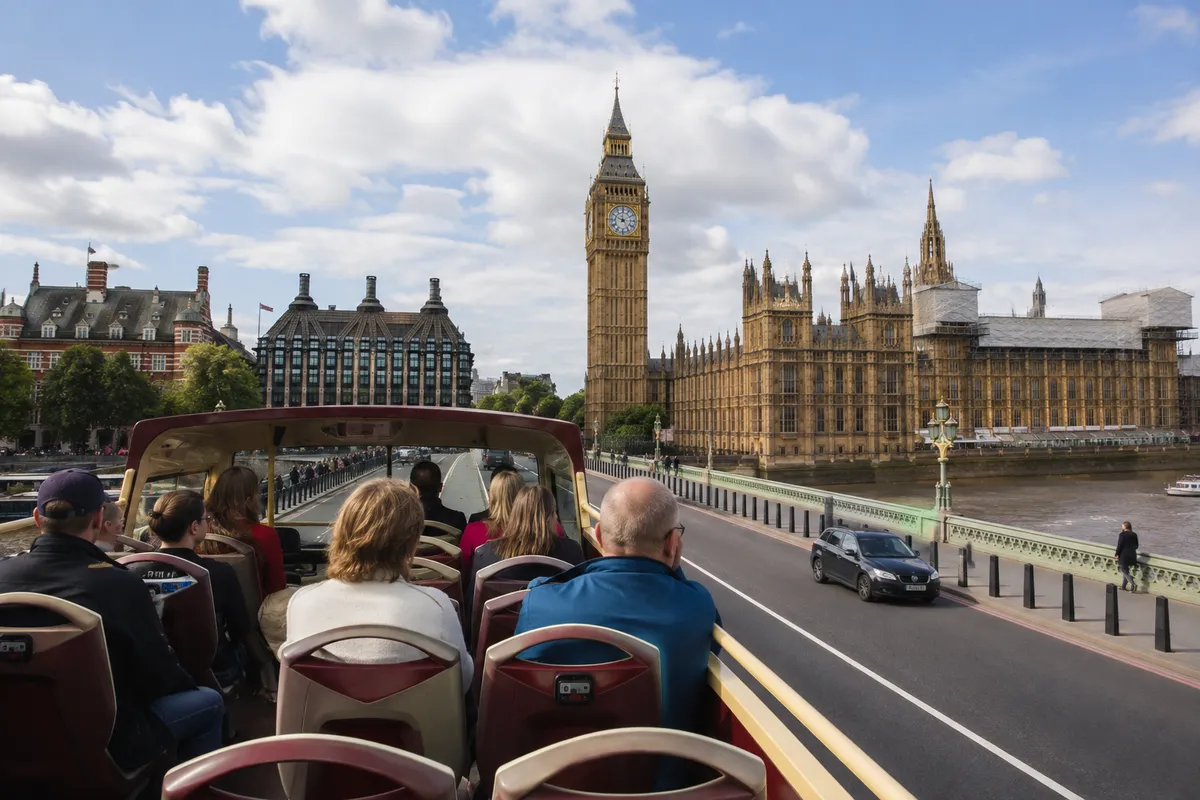
A ticket for the open-top sightseeing fleet in central London costs at least £32.00, while London’s public buses carry passengers along the same iconic avenues for a daily fare capped at £5.25. Sitting on the upper deck in pouring rain or inching through afternoon gridlock along Whitehall makes many visitors question their purchase. This comprehensive Big Bus London review examines route logistics, pricing tiers, real-world traffic bottlenecks, and hidden operational policies to establish whether an open-top sightseeing bus pass justifies the substantial premium over standard transit.
After logging circuits on over sixty hop-on networks across the globe, I have found that London presents unique operational friction. Between early evening service shutdowns and kerbside street touts charging steep surcharges, using a london hop on hop off tour requires a deliberate strategy rather than an impulse walk-up purchase. Here is how the service genuinely operates on the streets of the British capital.
Big Bus London Review: Route Network, Hop-On Stops, and Boarding Hubs
Core Circuit Breakdown: Red Route Landmarks Loop, Blue Route, and Green Link
The network operates three distinct color-coded circuits covering more than 50 stops across the capital, as documented on the Big Bus Tours routes and maps portal. The primary circuit is the Red Route landmarks loop, which encompasses 28 central London stops. It passes Big Ben, the London Eye, St Paul's Cathedral, and the Tower of London, completing a nominal circuit in roughly 2 hours and 30 minutes with departures scheduled every 15 to 20 minutes from 08:30 to 17:45.
The Blue Route West London circuit features 46 stops focusing on West London cultural sights including Kensington Palace, Harrods, Hyde Park, and the South Kensington museum district. This loop runs every 20 minutes between 08:26 and 18:00, requiring 3 hours and 35 minutes to complete a full non-stop circuit. For visitors arriving by rail, the Green Link connector runs every 45 minutes from 08:30 to 18:00, taking 70 minutes to link King's Cross, St Pancras International, and Euston stations with interchange stops around Bloomsbury and Covent Garden.
Boarding points require careful attention. Long-term kerbside restrictions near Green Park Station Stop 1 have shifted the primary central dispatch terminus for the Red Route to Hard Rock Cafe Stop 2 Piccadilly. Boarding at Stop 2 provides the cleanest start for travelers wishing to secure front-row seats on the upper deck before mid-route passenger loads accumulate.
Finding Stops and Real-Time Bus Monitoring via the Mobile App
Locating pick-up points on congested London streets can prove frustrating because Big Bus stops alternate between standalone maroon-and-yellow pylons and shared Transport for London (TfL) bus shelters. At shared stops, a small rectangular Big Bus insignia mounted beneath the standard red TfL roundel marks the pick-up zone. Standing at a shelter without that specific logo means buses will bypass you entirely.
The free Big Bus Tours mobile app provides live GPS tracking and arrival countdowns for every designated stop across all active loops. In practice, vehicle tracking updates every few seconds, allowing you to monitor approaching double-deckers. However, tall stone architecture throughout Westminster and the City can create minor GPS drift on your smartphone map screen.
The live app ETA reflects vehicle distance, not passenger capacity. If an incoming double-decker arrives with a full open-top deck, boarding marshals will restrict boarding or direct passengers to the enclosed lower salon until departing riders vacate their seats.
Onboard Hardware: Open-Top Seating, Audio Guides, and Commentary Quality
The fleet consists of modern open-top double-decker buses with a split upper level: the front rows are sheltered beneath a fixed canopy, while the middle and rear rows are completely open to the elements. The lower salon is fully enclosed and heated, though window condensation frequently limits outward visibility during rainy spells. Taking in the skyline requires braving the upper deck.
Pre-recorded audio commentary is provided in seven languages: English, French, German, Italian, Spanish, Brazilian Portuguese, and Mandarin Chinese. Narration plays through headphone jacks located beside each seat pairing. The onboard system syncs automatically with GPS geofencing triggers to deliver historical context as the bus approaches landmarks.
The complimentary single-use earphones distributed upon boarding feature thin plastic buds that transmit minimal bass and allow significant ambient traffic rumble to bleed through. Plugging in your own standard 3.5mm wired headphones dramatically improves voice clarity over the drone of diesel engines, squealing air brakes, and pedestrian chatter.
Big Bus London Tickets, Inclusions, and Pricing Breakdown
Pricing Tiers Compared: Discover, Essential, and Explore Passes
Purchasing big bus london tickets requires navigating distinct ticket tiers, as listed on the official Big Bus Tours ticketing page. Online purchases provide significant discounts compared to street rates. Children aged 3 and under travel completely free of charge across all routes without requiring an allocated ticket.
| Ticket Tier | Online Adult (16+) | Online Child (4–15) | Family (2A + 2C) | Key Inclusions |
|---|---|---|---|---|
| One Day Ticket | £32.00 | £19.00 | N/A | Same-day bus access until evening cut-off |
| 24-Hour Discover | £36.99 | £29.99 | £113.99 | Rolling 24-hour hop-on hop-off bus travel |
| 48-Hour Essential | £46.99 | £38.99 | £151.99 | 48h bus + 1-way river cruise + 3 walking tours |
| 48-Hour Explore | £56.99 | £46.99 | £183.99 | All Essential perks + 2h Evening Panoramic Tour |
Beyond standard passes, Big Bus sells package combinations such as a Tower of London entry combo or a London Eye fast-track pass. When buying these attraction bundles, travelers must note that purchasing the pass does not automatically secure your entry time. You must independently visit the designated attraction portals to reserve specific timed-entry admission slots, or you risk being turned away during peak afternoon hours.
The River Thames Cruise: Westminster Pier to Tower Pier Route
The Essential and Explore tickets include a bundled one-way river cruise operated in partnership with City Cruises between Westminster Pier and Tower Pier. The voyage operates in either direction, taking roughly 40 minutes to glide past Shakespeare's Globe, Tate Modern, HMS Belfast, and under Tower Bridge. Boats feature an open upper observation deck, an enclosed lower salon with refreshments, and live spoken skipper commentary.
Redeeming this cruise inclusion involves an essential operational step. You cannot board the vessel simply by flashing your smartphone app at the boarding turnstile. Passengers must present their active digital ticket at the City Cruises ticket window at either pier to receive a printed boarding pass before joining the queue.
Check daily departure boards at Westminster Pier or Tower Pier on the morning of your trip. Sailing intervals fluctuate between 15 and 40 minutes depending on tidal river conditions and seasonality.
Walking Tour Inclusions: Royal London, Jack the Ripper, and Harry Potter
Both 48-hour ticket tiers (Essential and Explore) bundle three guided walking tours led by local English-speaking guides. These walks explore historical enclaves inaccessible to large double-decker buses, departing daily from specific network stops:
- The Royal Walk: Departs from Stop 8 (Trafalgar Square) at 10:00 AM (90-minute duration).
- Jack the Ripper Walk: Departs from Stop 19 (Tower of London) at 1:00 PM (120-minute duration).
- Harry Potter Walk: Departs from Stop 21 (Westminster Pier) at 4:00 PM (120-minute duration).
Unlike the multilingual bus circuits, these walking tours are conducted strictly in English without headset translations. The walks cover substantial distances over urban pavement, and guides operate within London's standard tips-based guiding culture, so carry small change if you wish to tip at the end.
Operational Realities: Traffic Jams, Weather, and Daily Comfort
London Traffic Congestion and Loop Time Delays
The primary drawback of any london sightseeing bus is central London's relentless traffic congestion. Despite bus lane access along major avenues, severe bottlenecks regularly form around Parliament Square, Westminster Bridge, Whitehall, Piccadilly, and Tower Hill. During afternoon peak periods, the nominal 2.5-hour circuit on the Red Route frequently stretches to 3.5 or even 4 hours.
When severe gridlock threatens network scheduling, dispatchers occasionally practice "short-turning." This involves terminating a bus run early—often short of Tower Hill or Aldwych—and directing all passengers to alight and wait for the next following service. Experiencing an unexpected curtailment on a chilly afternoon can leave you waiting on the pavement for 20 to 30 minutes.
Furthermore, daytime hop-on services conclude early. With terminal runs departing between 17:45 and 18:00, Big Bus cannot serve as late-night transit for West End theatre performances or evening restaurant bookings across town.
Top-Deck Wind Chill, Weather Exposure, and Seating Availability
Riding on the top deck of an open top bus london provides panoramic photo angles over historic boundary walls, but exposure to British weather demands physical preparation. When the vehicle reaches standard speeds of 30 to 40 km/h, incoming air creates a pronounced wind chill effect that cuts through light clothing even on sunny days. Bring windproof outerwear and a warm layer regardless of the ground-level forecast.
Rain alters top-deck comfort immediately. While the fixed canopy over the front rows prevents direct downpours, swirling gusts blow moisture across upper seats. Once rainfall begins, passengers rush down to the lower salon, where the limited 26-seat capacity fills rapidly, leaving late-boarders with standing room only.
Physical Accessibility, Strollers, and Assistance Animal Rules
Navigating an open-top bus with mobility equipment involves strict structural constraints. Each double-decker bus can accommodate only 1 wheelchair user at a time on the lower deck via a manual fold-out ramp. Wheelchair users cannot access the upper open deck due to narrow, curved staircases. Wheelchair space availability operates strictly on a first-come, first-served basis at kerbside stops.
Traveling with children also requires mechanical compliance. Strollers and pushchairs must be folded flat and stowed in the dedicated lower-deck luggage pen or beneath bench seats before departure. Open prams cannot remain in aisles or occupy the designated wheelchair bay. For travelers with pets, note that only certified assistance animals and guide dogs are permitted on board; companion animals are strictly prohibited.
Big Bus London vs. Public Transit: Transport for London Comparison
Price Differential: Big Bus Passes vs. TfL Daily Contactless Fare Caps
Evaluating financial value requires a direct Transport for London comparison. Under fare structures set by Transport for London fare regulations, London’s public transit network operates on automated contactless daily fare caps that are vastly cheaper than private tour buses.
| Transit Option | Daily Cost (Adult) | Child Policy (Under 11) | Audio Commentary |
|---|---|---|---|
| Big Bus 1-Day Pass | £32.00 | £19.00 (Age 4–15) | 7-language pre-recorded GPS audio |
| TfL Standard Bus Daily Cap | £5.25 | Free with fare-paying adult | None (Visual destination screens) |
| TfL Zone 1–2 Tube & Bus Cap | £8.90 | Free with fare-paying adult | None |
Public bus journeys in London cost a flat £1.75 per single trip, automatically capping out at £5.25 per day no matter how many standard red buses you board. For tourists considering the 24-Hour Discover Ticket at £36.99, standard public buses offer a net daily savings of over £31.00 per adult. To break even on a Big Bus pass, you must place high financial value on the elevated open-roof perspective, the GPS narration, and the bundled river cruise (which retails separately for roughly £15.00).
Scenic Public Double-Decker Alternatives: Iconic TfL Routes 9, 15, 24, and 26
Travelers willing to manage their own sightseeing itinerary can recreate the central tourist circuit aboard standard red TfL double-deckers for the price of a coffee. Bagging the front-row window seats on the top deck provides outstanding views across central London:
- Route 9: Runs from Aldwych through Trafalgar Square, Piccadilly Circus, Green Park, Hyde Park Corner, Knightsbridge (Harrods), and past Kensington Palace.
- Route 15: Connects Trafalgar Square and Charing Cross with the Tower of London, tracing Fleet Street, passing St Paul’s Cathedral, and crossing the City.
- Route 24: Operates from Camden Town down past Leicester Square, Trafalgar Square, Whitehall (Downing Street), and Westminster Abbey to Pimlico.
- Route 26: The official replacement for the historic Route 11 City corridor, traveling from Victoria through Westminster, Aldwych, Fleet Street, St Paul's Cathedral, and Liverpool Street.
While public buses lack open roofs and historical audio narration, they run every 4 to 8 minutes throughout the day and into the night, allowing you to bypass tour stop queues entirely.
Booking Strategy, Third-Party Vouchers, and Touting Traps
Digital In-App Tickets, Advance Online Rates, and Cancellation Terms
Securing tickets online ahead of time is mandatory if you want to avoid inflated street prices. Booking directly via the official Big Bus website provides their Fully Flexible Bus Ticket guarantee, which permits complimentary date changes prior to ticket activation. If you value flexibility, booking via major third-party platforms like Viator or Headout often provides a 24-hour full cancellation refund window, which direct bookings typically exclude.
Boarding has been simplified through in-app digital ticketing. Once purchased, your pass lives within the Big Bus smartphone app. Upon boarding, you tap to activate the pass, which generates a real-time countdown timer screen that you show directly to the bus driver. For travelers comparing booking policies across European operators, the flexibility rules mirror those detailed in our Big Bus Tours in-depth brand review.
Street Ticket Touts and Physical Voucher Exchange Traps
Never purchase tickets from kerbside street ticket touts loitering around Piccadilly Circus, Victoria Station, or Westminster Pier. Street sellers charge full walk-up rates, adding markups of £7.00 to £13.00 per adult over online pricing. Furthermore, street-issued paper vouchers are strictly non-refundable if bad weather ruins your plans.
If you redeem third-party agency vouchers (such as from a hotel concierge or The London Pass), the kerbside marshal will scan your smartphone code and print out a physical paper receipt. Keep this paper slip safe: if you lose it, drivers cannot look up your third-party booking number, and you will be forced to purchase a new ticket.
Final Verdict: Is the Big Bus London Tour Pass Worth the Money?
Best Use Cases: Who Gets Maximum Value from Big Bus London
The Big Bus pass delivers genuine value for specific types of travelers. If you have only 24 to 48 hours in London and want a comprehensive architectural overview without navigating labyrinthine Underground corridors, the elevated top-deck perspective is unmatched. Gliding eye-level past the carved pediments of Whitehall and the stone facades of Fleet Street provides angles impossible to capture from subterranean Tube platforms.
It is equally valuable for families with young children or travelers with limited physical stamina. Deep-level London Underground stations involve substantial walking, steep escalators, and crowded platforms. Resting on the upper deck while taking in the major landmarks eliminates transit fatigue. To maximize your investment, select the 48-Hour Essential pass, ride the Red Route loop early in the morning before traffic builds, and redeem both the Thames river cruise and the Jack the Ripper walking tour.
When to Skip It: Travelers Who Should Choose Alternative Transit
Budget-conscious independent travelers should skip Big Bus entirely. Spending £36.99 or more per person simply for transportation between sights makes little financial sense when standard TfL buses cap out at £5.25 per day. If you already know which museums you plan to enter and hold timed-entry exhibition tickets, sitting trapped in a double-decker in a 40-minute Piccadilly traffic jam will wreck your schedule.
Finally, avoid this tour pass if your sightseeing extends into the evening. With buses returning to depots before 18:00, you will find yourself relying on the Tube or public night buses anyway. If you want to compare how other sightseeing providers handle capital city traffic, explore our comprehensive London hop-on hop-off operator comparison or see how local transit stacks up in our hop-on bus vs public transit cost breakdown before making your final purchase.