

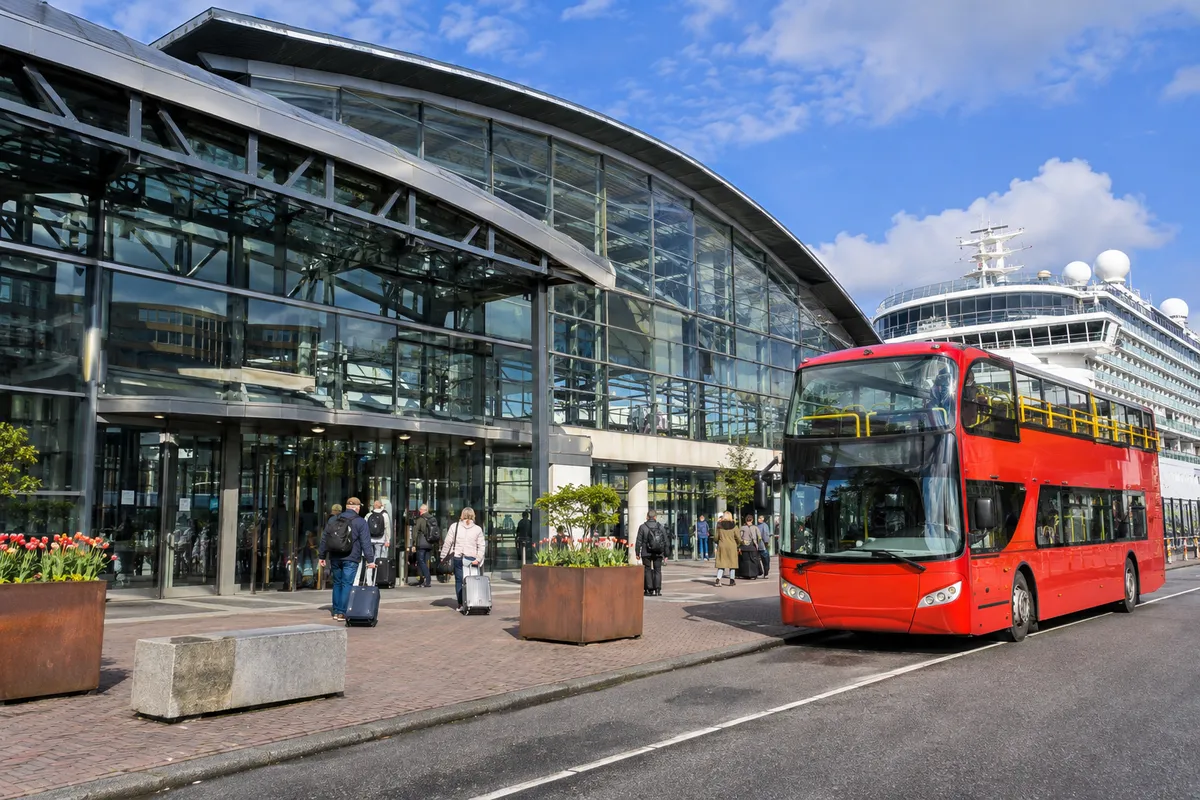
A hop-on bus from the cruise terminal only makes sense once two numbers are settled: which berth your ship uses, and what time you have to be back at the gangway. Passenger Terminal Amsterdam sits at Piet Heinkade 27, a 15-minute walk from Centraal. Felison at IJmuiden is 30 km west behind the North Sea locks, and it rewrites the arithmetic for the whole day.
Everything after that is fares. €27.50 buys the sightseeing bus, €10 buys a GVB day pass good for 24 hours, a full loop takes 60 to 70 minutes, and the last bus leaves stop 1 at 17:00. The two figures nobody prints are what your line charges for its own excursion on your sailing date and what the transfer from your berth costs. Both get priced against a DIY day below.
Where the ship actually berths
Amsterdam has two cruise addresses that behave nothing alike, and your booking names one of them. Passenger Terminal Amsterdam is the city-centre one: Piet Heinkade 27, on the IJ, with Centraal 15 minutes away on foot. Walk three to five minutes to the Muziekgebouw/Bimhuis tram stop opposite the terminal and tram 26 takes you one stop to Centraal for €3.40.
| Berth | Getting to the centre | Cost |
|---|---|---|
| PTA, Piet Heinkade 27 | 15 minutes on foot; tram 26 one stop from Muziekgebouw/Bimhuis | Free, or €3.40 for an hour on GVB |
| Felison Cruise Terminal, IJmuiden, Cruiseboulevard 10 | Taxi or Uber about 30 minutes; bus 382 to Sloterdijk then a train, about an hour door to door | Taxi roughly €80–125 each way per car; public transport a few euros |
| Not on your documents yet | Nothing to plan around | Ask the line before you book anything |
Two recent decisions explain why so many big ships now dock at IJmuiden. Amsterdam's council agreed in 2024 to cap ocean cruise calls at the terminal at 100 a year from 2026, and to move the terminal out of the centre with 2035 as the target. Neither rule tells you where your ship goes, so read the berth notice your line sends; the itinerary map will not tell you. Cruise ships to Amsterdam is where the port explains how calls are allocated.
The IJmuiden taxi figure is an estimate and worth checking on the day; Uber and Bolt run the same route at similar prices. What matters for planning is the shape of it: 30 km of road.
The first time I came off at Felison, I followed the map to the Badweg stop and found myself climbing the dike in a crosswind with the ship still behind me. Bus 382 is frequent and comfortable, roughly every 15 minutes to Sloterdijk, but it does not come to the terminal gate, and the walk back at the end of the day is the part nobody mentions.
What the sightseeing bus covers
Amsterdam does not allow sightseeing buses to drive or stop in the old centre, so City Sightseeing runs a perimeter loop and the last stretch to any address inside the ring is on foot. The current map lists nine numbered stops, even though the operator's marketing still says ten.
| Stop | Worth getting off for | Where it leaves you |
|---|---|---|
| 1 Central Station East, De Ruijterkade 139 | Start of the loop, and the last departure at 17:00 | Behind Centraal on the IJ side |
| 2 Passenger Terminal Amsterdam, Piet Heinkade 77A | Your berth | Number 77A, a few minutes along the quay from the terminal door at 27 |
| 3 World of Gassan, Nieuwe Uilenburgerstraat 173 | A diamond showroom, plus free toilets | East side, 10 minutes from Waterlooplein |
| 4 Waterlooplein / Jewish Cultural Quarter, Nieuwe Amstelstraat 1 | Rembrandt House, Jewish Quarter, the flea market | Edge of the old centre |
| 5 Royal Theatre Carré, Mauritskade 1B | River side, National Maritime Museum by foot | Eastern ring |
| 6 Heineken Experience, Stadhouderskade 78 | De Pijp, Albert Cuyp market | South of the centre |
| 7 Museum District, Stadhouderskade 47 | Rijksmuseum, Van Gogh Museum, Stedelijk | Museumplein on foot |
| 8 Leidseplein / Vondelpark, Stadhouderskade 24B | Vondelpark, theatres, dinner | West edge |
| 9 Jordaan / Westerpark, Nassaukade 57 | Jordaan cafés, Anne Frank House 10 to 15 minutes on foot | North-west |
The bus has no open deck: the operator says Amsterdam's tram wires rule it out, so the open-top photographs in the brochures come from other cities. And because the council will not let the company put up stop signs, your eyes are useless; the pin in the app is the stop, as City Sightseeing Amsterdam's own FAQ explains. That is also why the walk from the terminal door to Piet Heinkade 77A catches people out.
The loop runs 60 to 70 minutes end to end without hopping off, and buses come about every 25 minutes. Seats are first come, first served: if a bus is full you wait for the next one, and groups of ten or more may be split across two departures. There is a GPS audio guide in 18 languages with free earphones, WiFi on board, and a free visit to the diamond showroom included in the ticket.
The ticket rules that change the maths
€27.50 is the online price for the bus-only ticket, against a €36 list price. The 24-hour clock starts when you first use it: board at 15:00 and it runs until 15:00 the next day, though nothing runs overnight. On a two-day call that late start is genuinely useful; on a one-day call you have already lost the morning.
The operator sells 24 and 48 hour versions from the same product page, so check the duration line in the basket before paying. Booking directly also gives you free cancellation or rescheduling up to 24 hours ahead, which is the only real protection you have if the berth changes. A bus and river cruise combo is a separate purchase with its own date rules and its own boarding point, so price it as a different product.
GVB is the city's own transport company, and its 2026 prices are fixed, published and easy to compare:
| Ticket | 2026 price | Covers | Clock |
|---|---|---|---|
| City Sightseeing bus | €27.50 online | Nine-stop loop, audio guide, no admission | 24 hours from first use |
| GVB 1 hour | €3.40 | GVB tram, bus, metro | 1 hour from check-in |
| GVB day ticket | €10 adult, €5 child 4–11 | GVB only | 24 hours from check-in |
| GVB 48 hours | €16 | GVB only | 48 hours |
| GVB 72 hours | €21.50 | GVB only | 72 hours |
| OVpay contactless | €1.16 plus €0.217 per km | GVB only | Per journey |
| Amsterdam and Region Travel Ticket | €23, €34 or €44 | GVB plus EBS and Connexxion, including bus 391 to Zaanse Schans | 1, 2 or 3 days |
Child ages are where families get caught. The bus sells a child ticket for ages 4 to 12, and under-threes ride free, two per paying adult. GVB draws the line at 11, so a 12-year-old pays a child fare on the sightseeing bus and a full adult fare on the tram. The old 1.5-hour GVB ticket disappeared on 1 January 2026, which kills a comparison you will still find in older guides.
A GVB day ticket covers trams, buses and metro run by GVB and nothing else: EBS regional buses, Connexxion and NS trains all sit outside it. The GVB fare table is the page to check before you assume a pass covers a trip, and the regional ticket is the one that reaches the windmills by bus.
The Amsterdam & Region Travel Ticket also covers NS trains within the Amsterdam Area, so include it when comparing a regional bus-and-train day with separate fares. Its clock differs from GVB’s rolling passes: I amsterdam specifies calendar days, with validity ending at 04:00 after the final day. First using a one-day ticket in the afternoon does not make it valid until the following afternoon.
The cost test, with numbers
Three shore days, priced from published fares. Where a cruise line sells a comparable tour, its price sits beside the DIY figure.
| Shore day | DIY, per person | Ship excursion, per person |
|---|---|---|
| City centre from PTA, six to eight hours | €10 GVB day ticket, or €3.40 an hour if you walk most of it; €27.50 if you want the loop as well | No line publishes a price without a sailing date; use the quote template below |
| Zaanse Schans from PTA, half a day | €14.40 on foot to Centraal, €17.80 with tram 26 both ways: €9.40 train return plus €5 windmill entry | Norwegian's four-hour windmill tour, sold from IJmuiden: from $119.99 adult, $99.99 child |
| IJmuiden, eight-hour call | €160–250 for a taxi return per car; bus 382 plus train for about an hour each way | Norwegian's transfer-only Amsterdam On Your Own, eight hours: from $119.99 adult, $89.99 child |
Compare the amount payable after any excursion credit, not just the advertised fare. For eligible bookings, Norwegian Cruise Line provides a $50 shore-excursion credit for the first guest only. Its published exclusions include transfers, shuttles, hop-on-hop-off buses and “on your own” experiences. Do not automatically deduct $50 from the Amsterdam On Your Own price; check the terms attached to your reservation.
Case one: the centre, from PTA
At PTA the bus is competing with a €10 day ticket and your own feet. The centre is 15 minutes away and everything inside it is walkable, so the loop earns its €27.50 only when you use it as transport three or four times between clusters. As a tour it is an expensive hour. Two hops and a bit of walking is a €10 day. The hop-on bus versus public transit cost test runs the same arithmetic for other cities.
Case two: Zaanse Schans, from PTA
The village is free to walk, the windmills that charge are €5 for adults and €2.50 for children, and the Sprinter from Centraal takes 17 minutes to Zaandijk Zaanse Schans, €9.40 return, with a 10 to 15 minute walk at the far end. Leave at 10:00 and you are back on the quay by 15:00 with a windmill, a cheese demo and a clog workshop behind you.
This is the case where DIY wins outright. The tour you would buy instead is a four-hour coach product, and Norwegian's published version starts at $119.99: it exists because it collects passengers at IJmuiden, 30 km from the windmills. From PTA you are already 17 minutes away.
Choose the windmill before fixing a winter itinerary. De Zaansche Molen lists De Zoeker and De Bonte Hen as closed from November through March except for group visits by appointment. De Kat and Het Jonge Schaap have daily opening schedules, with specified holiday exceptions for De Kat. Check the individual mill’s hours rather than treating access to the village as access to every working mill.
Case three: IJmuiden, eight hours
Here the transfer is the product. Norwegian sells Amsterdam On Your Own as an eight-hour coach ride with an escort for the first hour and nearly six hours free: a bus ticket, priced per person, with a guaranteed return. A taxi for the same journey costs €80–125 each way, which for a couple is roughly the same money as two coach seats and gets you there 30 minutes faster in each direction.
The break-even rule, corrected: compare the excursion premium with a return taxi, meaning both legs. At IJmuiden that is €160–250 per car, so a tour costing less than the round trip is the cheaper option once the guarantee is counted, and a tour costing more is not. Comparing the premium with a one-way fare doubles the apparent cost of doing it yourself and makes the coach look better than it is.
One thing no table shows: if you miss the ship at IJmuiden, the next port is not a tram ride away. That is why the coach transfer sells at that price to people who could otherwise take bus 382.
What the excursion includes, and what to ask for
A ship's tour bundles a coach, a guide and the line's control of your return. Admission appears only where the description names it; lunch, drinks and tips usually do not. What you cannot do is shorten the free time when you have had enough of a clog demonstration.
Cruise lines quote per tour with a starting-at figure that moves with the ship and the sailing date. Norwegian publishes from-prices on its Amsterdam (IJmuiden) shore excursion list: four hours of windmills at $119.99, a five-and-a-half-hour Volendam and Marken run at $129.99, eight hours to Delft and The Hague at $149.99. Celebrity lists the same kind of day, including a three-and-a-half-hour Zaanse Schans transfer and a seven-hour Full day Amsterdam Experience, but shows no price until you choose a sailing. The price genuinely depends on your date.
So ask for a quote with enough detail to compare. Send this, filled in:
Ship and sailing date: [ship], [date]. Cabin: [number]. Please quote [tour code or exact title] and confirm: price per adult and per child aged [age]; whether entry to [site] is included; door-to-door duration and the time back at the pier; walking distance and steps; cancellation terms; and what happens if the coach is delayed. My DIY plan for the same day costs [amount], so I need the difference, not the brochure price.
A quote without a tour code and a date cannot be lined up against a €27.50 bus ticket, and a brochure from-price cannot be lined up against anything.
Check the cancellation deadline before keeping a ship excursion as a backup. For onboard cancellations, Norwegian Cruise Line publishes a full refund more than 48 hours before the tour, but no refund for guest cancellations less than 48 hours before arrival at the relevant port. Certain special tours have different conditions. Waiting until the evening before Amsterdam to choose DIY can therefore leave you paying for both plans.
The clock: first bus, last bus, all-aboard
The published window is 10:00 to 17:00 from stop 1, with a bus about every 25 minutes. Your port call may be eight hours; your usable sightseeing window is smaller at both ends. A morning call loses the first hours to the 10:00 start, and an afternoon call ends at 17:00 at the central station, wherever your ship is.
Waiting is the hidden line in the budget: 25 minutes a hop is the planning figure. Four hops is over an hour and a half of standing about, which on a six-hour call is a quarter of your day.
For the return, budget 25 minutes of waiting, up to 25 minutes of riding to the terminal stop and 10 to 15 minutes of walking: about an hour before all-aboard. Tram 26 from Muziekgebouw/Bimhuis is 45 to 60 minutes including the walk.
Late in the afternoon the order of Plan B matters: the next bus, then tram 26, then a taxi, then the port agent's phone number. Load both apps while the ship's WiFi still works; City Sightseeing's shows where the buses actually are, and GVB's covers the tram.
Coming back from the Museum District a little after four one afternoon, I watched a full bus pull away with the driver holding up five fingers, meaning the next one. Rather than stand there I walked the Singelgracht to Leidseplein and picked the loop up there, which cost me 15 minutes of walking and saved 20 of waiting. With a 17:30 all-aboard I would not have tried it.
What to skip on a port day
The diamond stop. Stop 3 exists because the loop detours to a showroom, and the stop includes a free visit that reviews describe as a 10-minute pause on the way to the shop. The building does have free toilets and a coffee machine, which is the honest reason to get off.
The Anne Frank House without a booked slot. Tickets go on sale every Tuesday at 10:00 for the week six weeks ahead and are gone in minutes; there is no walk-up entry. On a port day that means booking six weeks before you sail or accepting the view of the Westerkerk from outside, which is a two-minute stop on foot from stop 9.
The Van Gogh Museum also requires a ticket with a start time for every visitor, including visitors entitled to free admission through a discount card. Tickets are available online only. If this is your Museum District stop, secure the museum slot before arranging the bus day; reaching stop 7 does not itself secure admission.
If your call at PTA is under five hours, skip the bus entirely: the loop alone eats 60 to 70 minutes of it.
Wheelchairs, children and groups
The buses are accessible, but the operator requires wheelchair users to board and leave independently for safety reasons, and a travelling companion does not change that. If you need help up the step, the bus is not your day; the ship's coach, which usually has staff to help, is.
Families get under-threes free, two per paying adult, and a child ticket for ages 4 to 12. Groups of ten or more may not fit on one departure, which matters if you have a timed entry or a ferry to catch. And nobody can guarantee you a seat on a specific bus, whatever the ticket says.
Before you walk down the gangway
- Berth confirmed from your line's notice, PTA or Felison IJmuiden, before you plan a route.
- All-aboard time saved on your lock screen; it is not 17:00 and it is not the last bus.
- Berth-to-stop distance measured: under 3 km, walk or a €10 GVB day; over it, price a transfer.
- Bus ticket bought online the day before, so the 24-hour cancellation still covers a berth change.
- Duration line in the basket checked, 24 or 48 hours, before you pay €27.50.
- Boarding stop pinned: Piet Heinkade 77A for the bus, Muziekgebouw/Bimhuis for tram 26.
- Any timed museum slot booked or dropped; there is no walk-up at the Anne Frank House.
- Return alarm set 60 minutes before all-aboard, with the taxi rank and the port agent's number saved.
Your passport and entry rules are the one thing not to leave to the morning: check the Netherlands visa and entry pages for your nationality and route before anything non-refundable is booked. Payment is the easy part, since a contactless bank card tapped in and out on the same card covers every tram and bus in the city.
One contactless card cannot check in several passengers: each traveller using OVpay needs a separate card or payment device. 9292 also requires the same card or phone at check-out as at check-in. Before leaving the ship, make sure everyone who needs a ticket has their own payment method or a separate transport ticket.
The same test in any port
Amsterdam is an unusually harsh case, because the bus cannot enter the centre at all, and it still teaches the method. Three numbers decide the day anywhere: the distance from the gangway to the nearest stop, measured in minutes rather than metres; whether the ticket clock rolls from first use or dies at midnight; and whether anyone guarantees your return. Amsterdam's bus answers the second one well and the third one not at all.
Add the dated quote for your ship's own tour and the choice usually settles itself before you read a review. At PTA with a full day, the €10 day pass plus your feet beats both paid options; at IJmuiden with anything less than six hours ashore, the coach wins because the road eats the morning. The middle case, a distant berth and a long call, is where the numbers are close enough that the guarantee decides it, and where the stop-by-stop detail in the Amsterdam hop-on bus guide is worth reading before you commit.