

What Paris Sightseeing in Rain Actually Requires
November in Paris averages 6.2–11.1 °C with 54.3 mm of rain. October is milder at 9.9–16.5 °C with 55.2 mm. Both are climate averages, so they describe what to pack; the week you get can be colder, drier or much wetter. What actually decides a wet day is narrower: whether a sight has a roofed core, whether it runs on your date, and what you lose if the weather wins.
Ten options follow, grouped by type. On the day, what separates them is the walk between the stop and the door, and how quickly the operator changes the service when conditions turn.
Selection Criteria: What Earns a Place on This Shortlist
A row had to offer a roofed core or a weather rule that changes what you buy, a schedule published before you leave the hotel, a short walk from the stop to the door, and a price you can check without an account. The Eiffel Tower qualifies on the weather rule even though most of it is open air: poor conditions can restrict the summit, and stair tickets now need a booked slot.
Covered seating is a fleet practice. Big Bus can put closed buses on the road when the weather turns, and no ticket reserves you a covered seat at the stop.
A wet October week and a dry November week both happen, so treat the averages as packing advice and check your own dates.
Paris Sightseeing in Rain: Ten Options Side by Side
The table groups rows by type – buses, boats, museums and one tower – and reads as a menu.
The Comparison Table
Prices are the cheapest standard adult entry at each operator's own ticket page. The covered column describes how much of the experience happens under a roof; it is an assessment, not a manufacturer's claim.
| Name | Type | Price from | Covered share | Main advantage | Main disadvantage |
|---|---|---|---|---|---|
| Tootbus Paris Discovery | Hop-on hop-off bus | €49 | Medium: lower deck; open top unless a closed bus is substituted | Live bus tracking and audio in the app; 2 h 15 loop | Timetable is approximate |
| Big Bus Paris Discover | Hop-on hop-off bus | €39 (full €49) | Medium: closed top only when a closed bus is substituted | Buses every 10–20 minutes; indoor ticket office at Stop #1 | No guaranteed covered seat |
| Big Bus Paris Essential | Bus plus 1 h cruise | €49 (full €60) | Medium: bus as above; cruise aboard a Bateaux Parisiens boat | One-hour cruise included for €10 over bus-only | Cruise runs on its own fixed departures |
| PARISCityVISION Paris City Tour | Non-stop coach | €29 | High: glazed coach | 90 minutes without getting wet between stops | Fixed departure, no hop-off |
| Bustronome | Dining bus | €75 lunch; €95 with drinks | High: glass roof | Meal and movement in one booking | Most expensive seat here |
| Tootbus Must See Paris combo | Bus plus Seine cruise | €63 | Medium: bus as above; cruise aboard a Vedettes de Paris boat | Cruise ticket stays valid for 15 days after purchase | Bus and boat run on separate clocks |
| Batobus | River hop-on hop-off | €23 adult, €13 child, 24 h | High: glass-covered trimarans | Nine piers, unlimited rides | Whole loop can close at once |
| Louvre | Museum | €22 EEA, €32 non-EEA | High: all indoors | Biggest indoor block; free under 18 | Closed Tuesdays |
| Musée d'Orsay | Museum | €16 online, €14 at the museum | High: all indoors | Open to 21:45 on Thursdays | Closed Mondays; entry rerouted by works |
| Eiffel Tower | Landmark | €23.50 second floor | Low: open air with enclosed levels | The one view you cannot get indoors | Summit can be restricted; stairs need a booking |
The Eiffel Tower is the only row that is mostly open air. Every other option has a roofed core or a glazed boat.
Reading the Price Column and What “From” Hides
Big Bus publishes a web rate and a full price: €39 against €49 for the 24-hour Discover, €49 against €60 for the Essential. Child bands differ, 4–12 on Big Bus and 4–11 on Batobus, where a child pays €13. The Louvre charges €22 to EEA citizens and residents and €32 to everyone else, while the Orsay has one adult rate.
Tootbus lists Paris Discovery from €49 and the Must See Paris combo from €63, and cuts both in web promotions; the Discovery was showing €36.75 with a 25% discount and the combo around €47. The combo adds a one-hour Vedettes de Paris cruise from Port de Suffren, beside the Eiffel Tower stop, and the cruise ticket stays valid for 15 days after purchase, so the boat can fall on a different day from the bus.
PARISCityVISION sells its 90-minute city tour from €29 under the Extime Travel name it now trades as – the cheapest moving roof here, and the one with no hop-off at all.
Bundles pair different boats. Big Bus Essential includes one hour with Les Bateaux Parisiens, so there is no guessing at the counter; the 48-hour Big Bus package instead adds a hop-on Batobus pass. The Tootbus combo uses Vedettes de Paris.
Where the Stops and Piers Change the Day
Big Bus Stop #1 at Louvre-Pyramide is also its information centre at 11 Avenue de l'Opéra, so you can buy a ticket and wait indoors. Batobus puts its Louvre pier four minutes from the museum and its Orsay pier two minutes from the museum door, by its own station pages; the Carrousel du Louvre, the underground mall beneath the inverted pyramid, is six minutes from the Louvre pier and dry the whole way.
Service changes are published before they reach the stop. Big Bus currently lists Stop #6 at the Grand Palais closed for roadworks until 3 December 2026, and Stop #7 at Iéna moved to Avenue Iéna facing the Hôtel Shangri-La. Batobus posts pier closures on its home page, and one notice there can take the entire loop off the table.
Look at the operator's service page and the Météo-France Paris forecast before you leave the hotel. Both take a minute and can save a walk to a closed pier.
What the Shortlist Leaves Out
Open-deck-only products, night buses, rooftop terraces and dinner cruises are absent: in drizzle the top deck empties and the view arrives through wet glass, and a night tour needs a clear evening to be worth its fare. The Eiffel Tower stays as the single conditional row because it is the one view you cannot get from a window. If the forecast holds dry, the top deck becomes the best seat in the city; pairing a daytime loop with an evening tour is how I would spend that evening.
Covered Bus Tours in Paris: What a Roof Actually Buys You
What gets sold as covered falls into a few shapes: a glazed coach with a fixed roof, a double-decker with a covered upper deck, and an ordinary open-top bus that may be replaced by a closed one when it rains. The price difference rarely matches the difference in shelter.
How Covered-Top Buses Behave in Wet Weather
On a wet route the fleet is the first variable. Big Bus substitutes closed buses when the weather turns, and at peak times neither deck comes with a reserved seat. Tootbus shows where its buses actually are in the app, which matters when the timetable is only approximate.
The lower deck is the reliable dry seat. On the Red Route a full circuit takes about 2 hours 15 minutes in traffic and the next bus is 10–20 minutes away, so hopping off to look at something costs you a wait in the rain.
Severe weather or an unplanned city event can suspend a whole route for a day, and the operator announces it on the service page.
I learned the hop-off maths on a drizzly afternoon at the Eiffel Tower stop: I stepped off for a photograph, watched two full buses pull away, and waited 25 minutes under a shop awning for one with space. Now I ride the loop first and decide about stops only if the sky clears.
The Bus Options in Detail: Coach, Double-Decker and Dining Bus
Tootbus Paris Discovery. The Blue Route sells one, two or three-day passes from €49, with live tracking and audio in the app. The loop runs about 2 hours 15 minutes, and in winter the last departure leaves Opéra/Grands Magasins at 17:00.
Big Bus Paris Discover. Twenty-four hours from €39, full price €49, buses every 10–20 minutes and a 2 hour 15 circuit. It is the cheapest way to keep moving under a roof, and it starts at the only stop with an indoor ticket office.
Big Bus Paris Essential. The same 24 hours plus a one-hour Bateaux Parisiens cruise, from €49 against a €60 full fare – about €10 over the bus-only ticket for the water.
PARISCityVISION Paris City Tour. A 90-minute non-stop loop in a glass coach at €29: no hopping off, no walking between stops, one fixed departure. For a wet first afternoon it is the least-effort orientation in the city.
Bustronome. Lunch on a moving bus under a glass roof: a four-course menu at 12:15 for €75, or €95 with the drinks package. Book it because you want a long lunch with the city sliding past.
None of these is a quick spin, so pick the loop that ends closest to where you want to walk next.
Autumn and Winter Timetables
| Service | Running window | What it means |
|---|---|---|
| Tootbus Blue Route | First bus 09:30, last 17:00, every 15 minutes, 2 November 2026 to 3 January 2027 | Winter timetable |
| Big Bus Red Route | First bus 09:45 from Stops #1, #8 and #10; last full tour 17:30 from Stop #1, which is also the last bus | No evening circuit |
| Batobus | 10:00–17:00 Monday to Thursday, 10:00–19:00 Friday to Sunday, 2 November 2026 to 31 March 2027 | Boats stop before dinner |
| Tootbus Kids Tour | Wednesdays at 14:30; closed 1 November 2026 to 3 January 2027 | Family product off for the season |
Tootbus has the earliest cut-off: last departure at 17:00 from Opéra/Grands Magasins until 3 January 2027, so a late lunch can cost you the loop. Big Bus runs its last full tour at 17:30 from Stop #1, and that departure is also the last bus of the day. The Kids Tour runs only on Wednesdays at 14:30 and closes for the season from 1 November to 3 January; Paris by Night is closed from 23 November to 3 January, which rules out an evening circuit this month.
River Shuttles and Covered Cruises on the Seine
A boat is the most rain-proof moving vantage point in Paris, provided the river is navigable and your pier is open.
Batobus in Rain: Glass Boats, Winter Hours and Pass Timing
The pass starts counting at first use, and only during opening hours. In winter the boats run 10:00–17:00 Monday to Thursday and 10:00–19:00 Friday to Sunday, measured at the first and last departure from the Eiffel Tower stop, so an afternoon activation can cost you most of the day.
A full loop without getting off takes about two hours across nine piers, with roughly 15 minutes between stops. Online the 24-hour pass is €23 for an adult and €13 for a child of 4–11; 48 hours costs €27 and €17, and a Navigo or Imagine R card brings the 24-hour fare to €18.
Plan a toilet stop before boarding: Batobus has no bathrooms on its boats or at its stops. This matters if you intend to stay aboard for the full two-hour circuit, particularly with children; schedule a museum or café break rather than relying on facilities at the next pier.
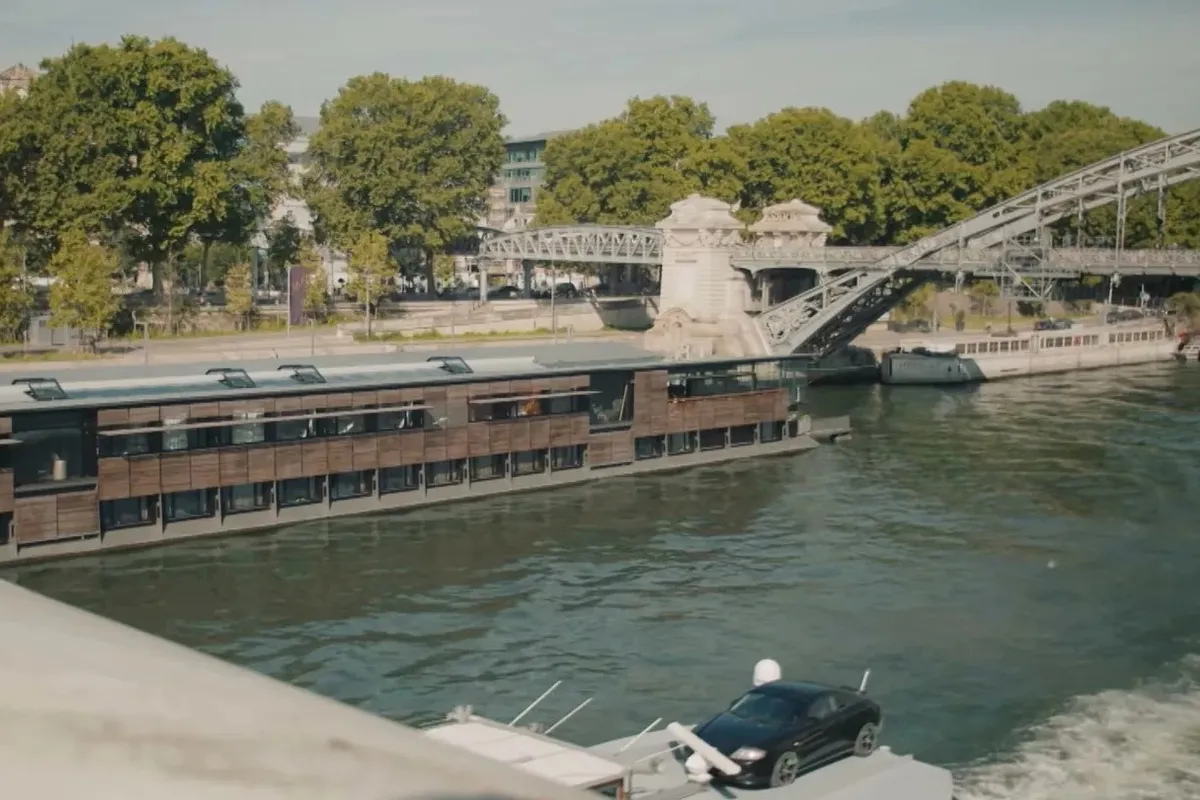
The trimarans are covered in glass, heated, with 180 seats and an open-air deck, so rain costs you the open deck while the view survives behind the windows. Piers are the weak point: one notice can close the whole loop, which is why the Orsay pier, two minutes from the museum door, is the one I use when the Louvre pier looks crowded.
A short walk from a pier does not mean step-free access. Batobus identifies the Eiffel Tower as its only wheelchair-accessible stop; its access ramp is also used by vehicles. Other docks and boarding routes involve stairs, so do not plan a wheelchair hop-on itinerary between museums. Pushchairs are allowed, but the operator recommends folding them and asking the crew to stow them at the front.
Last autumn I activated a 24-hour pass at the Orsay pier at half past one, rode to Notre-Dame and back, and still had to hurry the last stretch because the light went at five. The clock had started at the pier, and the boats stopped at 17:00 that Thursday.
Covered Riverboat Cruises Versus the Hop-On Shuttle
A Bateaux Parisiens sightseeing cruise lasts about an hour and sails in rain: its boats are glass-sided trimarans, so the view survives the weather. Batobus is the hop-on version, a two-hour full loop where you choose the stops, and it doubles as transport between the Louvre, the Orsay and the Eiffel Tower.
Flexibility is the real difference. A cruise has a fixed departure and a fixed duration; the shuttle turns the river into a bus lane. On a wet Thursday I would take the pass and finish at the Orsay, which stays open until 21:45. The bus versus Batobus comparison goes deeper on that trade.
A bundle removes the separate purchase: Big Bus Essential at €49 includes an hour with Bateaux Parisiens, and the Tootbus combo includes an hour with Vedettes de Paris.
Water Levels, Cancellations and Combo Tickets
High water can reroute or cancel a cruise, with a rebooking or refund offered instead, while the bus half of a combo keeps running. Whether the boat half can move to another day depends on the seller and the ticket type, so read the terms at the moment you pay.
Paris Indoor Sightseeing: Museums and Monuments for Wet Hours
The indoor stop anchors a wet day; the bus or boat only connects one to the next.
Timed-Entry Museums: Louvre and Musée d'Orsay
| Museum | Closed | Late night | Adult price | Booking note |
|---|---|---|---|---|
| Louvre | Tuesday | Wednesday and Friday to 21:00 | €22 EEA, €32 non-EEA | Book a slot, including free entry |
| Musée d'Orsay | Monday | Thursday to 21:45, last admission 21:00 | €16 online, €14 at the museum | Timed tickets use Entrance 1 on the quay |
Book a slot even when entry is free. At the Orsay, visitors with a timed ticket enter through Entrance 1 on the quay, while priority visitors, reseller vouchers and anyone without a ticket use Entrance 2 on the forecourt – worth knowing in rain, because the two queues sit at opposite ends of the building.
Settle the museum time before arranging the moving part of the day. Musée du Louvre tickets are valid only for the selected date and time and cannot be modified, exchanged or refunded. A change in your weather plans does not make the booking flexible; a cancellation or modification of the service by the museum can qualify for a refund under its terms.
The Louvre closes on Tuesdays and stays open until 21:00 on Wednesdays and Fridays. The Orsay closes on Mondays and runs to 21:45 on Thursdays, with last admission at 21:00. Prices split by residency at the Louvre, €22 against €32 as the Louvre's own ticket tiers show, and stay flat at the Orsay, where €16 online or €14 at the desk buys the same museum. Under-18s enter the Louvre free.
For a lower-cost evening, Musée du Louvre offers free admission to all visitors after 18:00 on the first Friday of each month, except July and August. Reserve a free timed ticket rather than treating this as guaranteed walk-up entry. This can replace a paid daytime Louvre visit if your dates align.
Paris Musées runs 14 museums and heritage sites. Most municipal museums keep their permanent collections free every day – the Petit Palais, Carnavalet, the Musée d'Art Moderne and the Maison de Victor Hugo among them – while the Catacombs and the archaeological crypt under Notre-Dame are ticketed and temporary exhibitions charge separately, as the Paris Musées network sets out.
The Orsay renovation runs to summer 2028 and reroutes entry, so allow a few extra minutes at the door and follow the signs instead of the map on your phone.
Weather-Dependent Monuments: The Eiffel Tower
The Eiffel Tower's official rates are €23.50 for the second floor by lift and €36.70 for the summit by lift; stairs to the second floor cost €14.80, and stairs plus the lift to the summit €28. New fares apply from 11 January 2027.
The expensive ticket carries the most weather risk. Summit access can be restricted in severe weather or at peak periods, and since 29 September 2026 stair tickets have needed an advance reservation, which makes them a poor spontaneous choice in rain. The second floor is €13.20 cheaper, and its view depends on cloud as much as the summit's does.
When the Rain Wins the Whole Day
Some days the forecast is wrong in the other direction: steady rain from breakfast, a closed pier, and no appetite for an open deck. The plan that works is one museum with a timed slot plus a taxi between two doors, and it helps to know where the dry seams are. The Carrousel du Louvre links the pyramid area to rue de Rivoli underground, with a food court at the bottom. Big Bus sells from its information centre at 11 Avenue de l'Opéra, so a ticket bought there costs you nothing in comfort while you wait. Beside the Orsay, the RER C stop of the same name sits within the block, which makes the Left Bank leg a short covered walk along the block.
Do not use the Louvre as a luggage-storage fallback: items larger than 55 × 35 × 20 cm are refused even in its welcome area. Free lockers serve smaller belongings, and umbrellas that do not fit inside a bag must go in the cloakroom’s umbrella stands. Musée du Louvre also treats any exit as final, so do not plan to leave for lunch and return on the same ticket.
If a pier closes, the museum plus a taxi still salvages the afternoon; that is the fallback I use when the river shuts the boats entirely.
How I Compared These Options
Fares and hours come from the operators' own pages – Tootbus Paris Discovery, the Big Bus Paris service information page, and Batobus pass prices – and from the Louvre, Orsay and Eiffel Tower admission pages. Prices are standard adult from-rates in euros, with web promotions noted where an operator runs one. Seasonal status got its own check: winter timetables, suspended family products, museum closing days, and any stop or pier listed as out of service. A product not running in the season stays out of the comparison.
Final Verdict: Which Wet-Weather Plan Fits Your Trip
Which plan fits depends on the weather you get and who is with you. Most wet trips land in one of the four cases below, and each has a total attached.
Picks by Scenario: Drizzle, Downpour, Family, Budget
Light drizzle, no real rain: Big Bus Discover from €39 for a loop plus one museum. With the Louvre at €22 the day lands near €61; at the non-EEA €32 it is €71. The bus gives orientation and the museum gives a warm hour.
Steady rain: skip the loop, anchor on a museum, then add a covered cruise. Louvre or Orsay in the morning, an hour with Bateaux Parisiens in the afternoon. Big Bus Essential at €49 buys the bus and the hour in one ticket.
Family: Batobus on 24 hours, €23 for an adult and €13 for a child of 4–11, because the boat is the attraction and everyone stays indoors. The Louvre is free under 18, and the Kids Tour runs only on Wednesdays until it closes for the season on 1 November.
Tight budget: the free municipal collections plus one paid anchor, the Orsay at €14 at the desk or a Batobus day at €23. The Paris sightseeing pass prices comparison sets the tiers side by side.
If you only need transport between museums, compare ordinary public transport before buying a sightseeing pass. In 2026, a Metro–Train–RER ticket costs €2.55 and a Bus–Tram ticket €2.05; the Navigo Day pass costs €12.30 for all zones, excluding airports, according to Île-de-France Mobilités. These are transport fares, not sightseeing packages.
A Rainy-Day Itinerary Built on One Pass and One Timed Slot
A shape that works: a 09:30 museum slot, lunch indoors, the Batobus pass activated at the pier around 13:30, two or three hops, and the last boat at 17:00 on a weekday or 19:00 at the weekend. On Thursdays the Orsay stays open to 21:45, which gives the evening an anchor.
Activate the pass at the pier, not at breakfast: the clock starts at first use and runs only while the boats operate.
Take a rain shell for the boat deck, shoes that survive wet cobbles, and one look at the 15-day forecast before you commit to the tower.
The Verdict
With one wet day and no ticket yet, I would book the Orsay for the morning – €16 online, or €14 at the desk – and put €23 into a Batobus pass. The museum does the shelter and the boat does the moving, and the pair costs under €40. The bus only wins when you want the upper deck during a dry hour, and then the €39 Big Bus web rate is the one to take; at the window it is €49.