

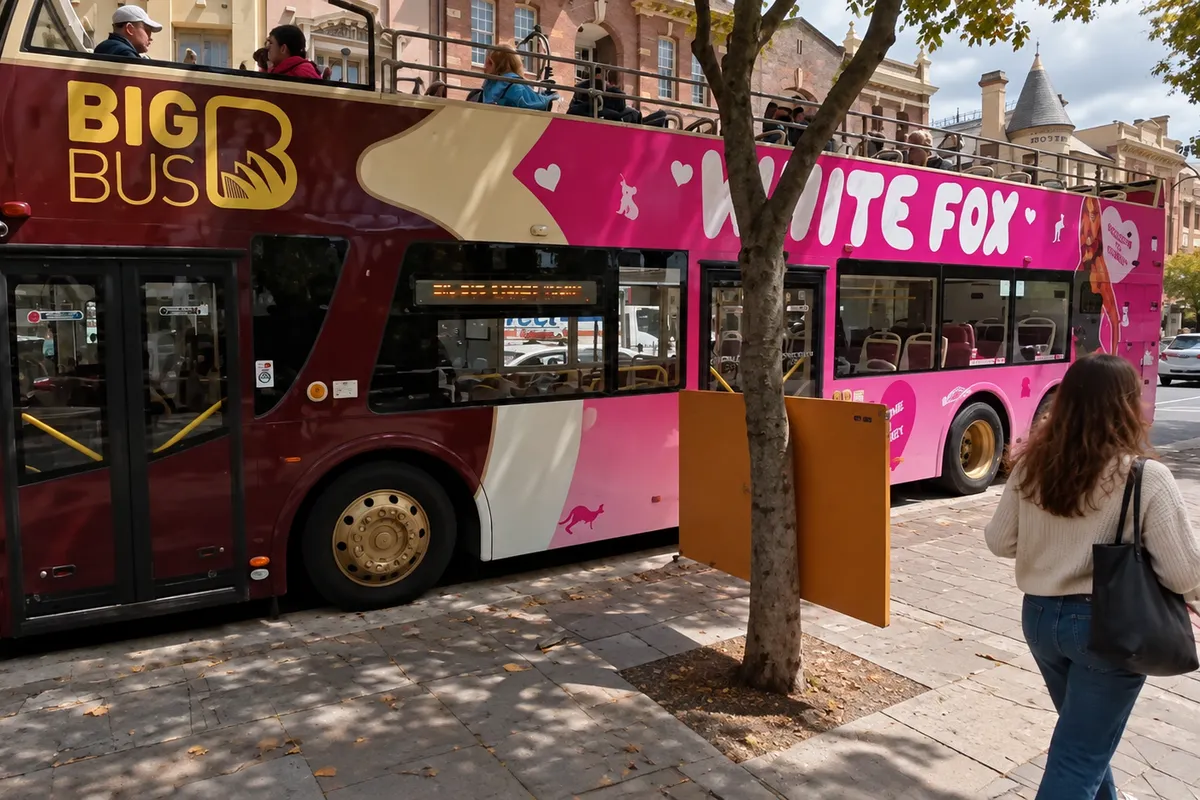
A good hop on hop off bus for seniors buys you a seated overview and cuts out awkward transport changes. A bad one leaves you at an unsheltered stop for 45 minutes, then presents a staircase between you and the view. The ticket price tells you very little about which experience you are buying.
I gave priority to boarding access, lower-deck comfort, walking from each stop, reliable frequency and the chance to rest. Commentary and route coverage matter too, but they come after the basics. A bus with 40 stops is not much use if reaching the palace still means a long uphill slog.
How I compared hop-on hop-off bus tours for seniors
Boarding and seats come before the view
The first thing I look at is the actual step into the bus. A modern low-floor vehicle may lower itself and deploy a ramp; an older sightseeing bus can still have a high first step and a awkward gap from the curb. A brochure photograph of a shiny open-top deck answers none of those questions.
Upper-deck stairs deserve equal attention. They are often narrow, steep and awkward when the bus moves, so I would not plan on going up and down at every stop. If stairs are difficult, treat the lower deck as your real seat and ask whether its windows still give a decent view.
Lower-deck seating is also useful in heat, wind and rain. On summer rides in Dubai, shade and air conditioning have mattered more to me than an unrestricted panorama. The open top looks lovely in the brochure; the weather has no interest in your itinerary.
The walk from the stop is part of the ticket
I measure a route by the distance between the bus pole and the attraction entrance, not by the name printed on the map. That walk can include pedestrian zones, road crossings, security barriers and a final flight of steps. “Colosseum” or “Castle” on a stop list does not mean door-to-door service.
Terrain changes the calculation. A flat 400-metre walk beside a museum is very different from 350 metres uphill over cobbles, especially with a cane or rollator. I also look for somewhere to sit near the stop, because a bench can be the difference between a manageable pause and an exhausting wait.
For older adults, sightseeing bus tours work best when two or three important stops involve little extra walking. The rest can be viewed from the bus. There is no prize for collecting every stop, apart from sore knees and a very thorough knowledge of bus shelters.
Frequency, loop time and hearing assistance
A 15- to 30-minute interval is usually workable if there is shelter and a seat. An hourly gap changes the whole day: miss one bus and your museum visit suddenly includes an unplanned outdoor waiting session. I treat frequency as a fatigue issue, not just a convenience.
Full-loop duration matters before you commit to staying seated. Rome’s Red Route takes about 103 minutes without hopping off, while heavy traffic can stretch a nominally short circuit elsewhere. A live bus-tracking app helps, although it cannot magically create a lower-deck seat on the next bus.
Many buses use wired earphones rather than a hearing-aid induction loop. If you use hearing aids, bring compatible over-ear headphones or your own neckloop rather than assuming Bluetooth will be available. I also download the route map so I can enlarge it; small print is not improved by a moving bus.
The most senior-friendly bus tours, compared
Ten tours at a glance
These are adult starting fares in 2026, not senior-specific concession prices. “Price from” usually means the simplest bus ticket, while combos and longer passes cost more. Singapore’s fare depends on the selected pass, so I have not forced a misleading number into the table.
| Tour | City | Type | Price from | Main advantage for seniors | Main drawback |
|---|---|---|---|---|---|
| Big Bus London Hop-On Hop-Off Tour | London | Sightseeing bus tour | £32.00 | Wheelchair dimensions can be agreed before travelling | No mobility scooters; upper deck requires stairs |
| Big Bus Vienna Hop-On Hop-Off Tour | Vienna | Hop-on hop-off bus tour | €37.00 | Mostly level sightseeing around the Ringstrasse | Costly beside public transport; exposed upper deck |
| City Sightseeing Amsterdam Bus & Boat Tour | Amsterdam | Bus and boat tour | €29.50 | Wheelchair-accessible buses and a seated canal option | Boat gangways and cabin steps can be difficult |
| City Sightseeing Florence Hop-On Hop-Off Tour | Florence | Sightseeing bus tour | €23.00 | Easy orientation across both sides of the Arno | Central pedestrian streets push stops to the perimeter |
| Big Bus Singapore Hop-On Hop-Off Tour | Singapore | Hop-on hop-off bus tour | Varies by pass | Air-conditioned lower-deck refuge from tropical heat | Accessible vehicle must be arranged 48 hours ahead |
| Big Bus Sydney & Bondi Hop-On Hop-Off Tour | Sydney | Hop-on hop-off bus tour | AUD 75.00 | City and Bondi sightseeing without changing services | One wheelchair per bus; scooters are not accepted |
| City Sightseeing Madrid Hop-On Hop-Off Tour | Madrid | Hop-on hop-off bus tour | €25.00 | Three lines help keep museum sightseeing compact | Some historic-centre walks involve slopes |
| City Sightseeing Edinburgh Hop-On Hop-Off Tour | Edinburgh | Hop-on hop-off bus tour | £20.00 | Reduces some climbing between New Town and Old Town | The castle still requires a steep cobbled walk |
| Big Bus New York Hop-On Hop-Off Tour | New York | Sightseeing bus tour | USD 62.00 | Whole fleet has wheelchair lifts rated to 650 lb | Midtown traffic and hourly Uptown intervals |
| Big Bus Rome Hop-On Hop-Off Sightseeing Tour | Rome | Hop-on hop-off bus tour | €23.00 | A seated overview without using crowded metro stations | Perimeter stops leave walks over exposed cobbles |
The cheapest ticket is not automatically the easiest day. Rome and Florence start at €23.00, but their remaining walks may cost more energy than Vienna’s €37.00 fare. I would pay for gentler logistics before paying for extra routes I was unlikely to use.
London, Vienna and Amsterdam: three different kinds of easy
London’s same-day 1 Day ticket starts at £32.00, while the 24-hour Discover pass starts at £36.99. I would choose the cheaper ticket only for an early start with several sights planned. Stop 26 at Buckingham Palace closes on Mondays, Wednesdays, Fridays and Sundays from 10:00 to 12:30 during Changing of the Guard; the Big Bus London service information is worth checking before building a morning around it.
Vienna is my low-stress choice for travellers who mainly want level streets and an easy mental map. The 24-hour Discover ticket costs €37.00. You are paying for commentary and simple orientation, though, not a transport bargain: the municipal 24-hour pass costs €9.70 and is the smarter purchase if you already know where you are going.
Amsterdam’s standalone bus or boat pass starts at €29.50; the 24-hour bus-and-boat combo costs €35.00 online or €40.00 walk-up. Buses run from stop 1 at 10:00–17:00 and boats at 09:30–17:45, year-round except King’s Day on 27 April. City Sightseeing Amsterdam also allows free cancellation up to 24 hours before the selected date. I would treat boat access as a separate question, because gangways and steps into the cabin can be awkward.
Florence, Rome and Madrid: cheap tickets, different walking loads
Florence offers continuous 24-, 48- and 72-hour tickets starting at €23.00. It is useful for seeing both sides of the Arno without working out local routes, but the pedestrian centre limits door-to-door convenience. I would ride for orientation and reserve my walking budget for one museum or viewpoint, not try to squeeze in every Renaissance greatest hit.
Rome’s single Red Route has seven active stops and takes about 103 minutes in standard traffic. From €23.00, it is a reasonable way to see the Colosseum area and Vatican-side sights without tackling metro stairs. The compromise is the walk from perimeter stops to the monuments, often over cobbles with little shade. I would stay on for the full circuit before choosing one stop.
Madrid gives you 31 stops across Historic, Modern and Contemporary lines from €25.00. Services run daily from 10:00 to 18:20, except 25 December and 1 January. Three lines sound generous, but route-hopping can become its own job. I would pick the line closest to the Prado or my other main stop and ignore the rest.
Singapore and Sydney: heat, distance and advance planning
Singapore’s Yellow city loop takes about 90 minutes and the Red heritage loop about 60 minutes, both starting at Suntec City Tourist Hub. Services operate daily except Chinese New Year’s Eve. The air-conditioned lower deck is a genuine advantage in tropical humidity, but only some vehicles have wheelchair lifts. Arrange one at least 48 hours ahead through Big Bus Singapore’s accessibility guidance, and do not assume upper-deck or attraction access.
Sydney’s adult tickets start at AUD 75.00 for 24 hours and AUD 99.00 for 48 hours. Those are ordinary adult fares, not senior concessions. Combining city and Bondi sightseeing saves transport changes, but it also makes for a long, sun-exposed day. I would sit downstairs for part of the route rather than treating sunburn as a souvenir.
Edinburgh and New York: the hill problem versus the traffic problem
Edinburgh’s £20.00 ticket is one of the cheaper entries here, and the bus helps with the height difference between New Town and the Old Town ridge. It does not stop at the castle gates. From George IV Bridge, visitors still face about 350 metres uphill over steep cobbled sections. If the castle is your only goal, the bus does not remove the hardest part.
New York is the clearest wheelchair-accessible choice in this group: Big Bus says its entire fleet has lifts with a 650 lb maximum capacity. The trade-off is time. Downtown full-circuit departures run from 9:00 to 16:30 every 30 minutes; Uptown runs from 10:00 to 16:00 every 60 minutes. Add Midtown traffic, and I would avoid a tightly timed afternoon. Fares and pass options are on the Big Bus New York ticket page.
Accessible hop-on hop-off tours: wheelchairs, scooters and companions
Lift capacity and scooter rules are not interchangeable
“Wheelchair accessible” can mean anything from every bus having a lift to a suitable vehicle being available only by arrangement. New York is the former, with lifts rated to 650 lb, roughly 295 kg. Singapore requires at least 48 hours’ notice. Turning up and hoping is not much of an accessibility plan.
Sydney allows one wheelchair per bus and sets a combined limit under 300 kg for the passenger, assistant and mobility aid. Mobility scooters are not accepted. London also does not currently accommodate scooters and asks wheelchair users to supply chair width and weight in advance so the operator can decide whether the chair can be carried.
I would send dimensions, total weight and a photograph of the mobility aid before paying, then keep the written reply with the ticket. Ask about the boarding gap and ramp as well as the lift. A vehicle can technically carry your chair and still be awkward at a particular curb.
The lower deck is a limited resource
The upper deck gets the photographs, but the lower deck gets the practical work done. It has fewer seats, and those seats fill quickly in rain, cold or extreme heat. If you cannot use the stairs, a full lower saloon may mean waiting for another bus even though plenty of seats are visible above.
I would board near the start of a route when possible and avoid making my first hop-off at the busiest central attraction. That improves the odds of choosing a seat rather than negotiating for one. A companion going upstairs to fetch a better view is optional; making you climb for it is not.
Rest breaks also need a backup plan. If the next bus is full, know which nearby museum café, station concourse or hotel lobby can provide a seat. Standing at a stop for one full interval is often more tiring than the attraction visit itself.
Companions, carers and service animals
I would not assume that a companion or carer travels free. Concessions, proof requirements and booking methods vary, and a carer ticket may need arranging with the operator rather than appearing as an online option. Budget for two full fares unless you have a confirmed concession in writing.
Service animals need the same precision. Ordinary dogs are not permitted on City Sightseeing Amsterdam buses, so anyone travelling with a guide or assistance dog should obtain the operator’s exception before booking. “No pets” and “no assistance dogs” are not the same rule, but the driver is not the person with whom you want to resolve that distinction.
A companion can also help with the less obvious jobs: watching the live map, checking the next stop and carrying headphones or a folding cane. I would still choose the route for the traveller with the lower mobility level, not for the person happy to sprint upstairs.
Keeping the sightseeing day at a manageable pace
One full loop and two stops is usually enough
My preferred plan is one uninterrupted circuit followed by no more than two purposeful hop-offs. Every additional stop means another walk, another wait, another boarding and another search for a seat. Five or six hop-offs may look productive on paper; physically, it is a series of small transport jobs.
Use the first loop to decide what genuinely deserves your energy. Rome takes about 103 minutes before you add any visits, so treating the bus as a continuous tour is not wasted time. On a 48-hour pass, spread the same approach over two gentle days instead of using the extra validity to schedule twice as much.
Start early enough that a delayed bus does not threaten your last museum entry or dinner reservation. A sightseeing pass works best as the flexible part of the day. Timed tickets, medical appointments and airport departures are poor things to hang off an hourly service.
Cobbles, gradients and misleading stop names
Edinburgh is the clearest warning: the castle walk remains uphill even after you have paid for transport. Rome adds uneven historic paving and exposed open areas around its major ruins. In both places, I would allow time to sit after arriving rather than heading straight for the entrance queue.
Lisbon needs similar caution. Its older quarters combine steep grades with polished calçada portuguesa, and large buses cannot thread through every narrow street. A stop labelled for a hilltop district may still leave a substantial climb; the Lisbon hop-on bus guide is useful for comparing where the different routes actually go.
With a cane or rollator, I would add roughly 15 minutes for each 100 metres of difficult uphill cobbles rather than trusting ordinary map timings. That is deliberately generous. Arriving early and sitting down beats arriving on schedule and needing the rest of the afternoon to recover.
Live tracking, service gaps and the toilet problem
Plan on there being no toilet aboard an open-top double-decker. Use an accessible restroom at a station, major museum or café before a long circuit, and place a comfort stop before the longest traffic-prone section. A 90-minute loop is a poor place to discover that the last opportunity was three stops ago.
Live tracking reduces unnecessary standing, but only if you use it before walking to the stop. Check the next bus, then wait indoors nearby when practical. Service alerts matter too: a closed stop or ceremonial diversion can undo an otherwise sensible plan.
If stairs are difficult, board early enough to choose a lower-deck seat. Keep water, a hat and a light windproof layer within reach rather than packed away. More seating and weather tactics are covered in the practical hop-on bus guide.
I would also carry an offline map and the operator’s contact details. Mobile data tends to fail precisely when you are staring at three identical red buses and wondering which one is yours.
Fares, concessions and the public-transport alternative
Do not build the budget around a senior discount
The headline tickets I compared for London, Sydney and New York are standard adult prices: from £32.00, AUD 75.00 and USD 62.00 respectively. I would budget the full adult fare and treat any senior or carer concession as a bonus. There is no single senior age eligibility rule across these operators.
Ticket names also deserve a slow read. London’s £32.00 1 Day product is for same-day use, whereas Discover is a 24-hour pass from £36.99. Vienna costs €37.00 for 24-hour Discover, €42.30 for 48-hour Essential and €51.30 for 72-hour Explore. Longer validity is useful only if you will actually ride on the extra day.
Amsterdam’s free cancellation up to 24 hours before the selected date is helpful when energy or weather is unpredictable. For age cut-offs and proof rules in general, the site’s guide to child, student and senior bus discounts gives the right questions to ask.
When an ordinary city bus is the better buy
London’s regular buses are low-floor, have retractable ramps and accommodate wheelchairs up to 70 cm wide by 120 cm long. The £1.75 Hopper fare allows bus and tram transfers within its one-hour window, so it is far cheaper than a £32.00–£36.99 sightseeing ticket. TfL Go provides live times, quieter-period information and step-free journey planning, as explained in Visit London’s accessible public transport guide.
Vienna is an even clearer financial comparison: €37.00 for Big Bus Discover versus €9.70 for a municipal 24-hour pass. Public transport wins for straightforward point-to-point travel. The commercial tour earns its premium when you want commentary in your language, one simple route and no need to work out transfers.
I would not use a sightseeing bus merely because it looks more tourist-friendly. If you already know the two places you want, an accessible local bus or tram may leave more money for a café with a comfortable chair. That is often the better luxury.
Payments and the messages worth sending before departure
When a card terminal abroad offers to charge you in your home currency, choose the local currency instead. Dynamic currency conversion lets the merchant or payment provider set the exchange rate, and it is rarely a favour. Paying in GBP, EUR, AUD or SGD as appropriate keeps the conversion with your card issuer.
For wheelchair travel, send the chair’s width, length and weight, plus any scooter details, before purchasing a non-refundable pass. Ask for the boarding arrangement and any companion conditions in one message. Save the reply offline beside your ticket and route map.
I would also keep fares in the destination currency rather than relying on a converted price from months earlier. Exchange rates move; the operator’s local fare is the number that matters at checkout. If a third-party seller makes the ticket hard to understand, buying direct is usually worth the few extra clicks.
My picks for different mobility levels
The tour I would choose for each kind of day
- Using a wheelchair or rollator: Big Bus New York is the simplest starting point because its entire fleet has lifts rated to 650 lb. London is possible with advance clearance of the chair; Singapore needs an accessible vehicle arranged at least 48 hours ahead.
- Low stamina but walking independently: Vienna is my pick for mostly level orientation. Ride the useful section, then stop rather than trying to justify the fare with a marathon.
- Heat sensitivity: Singapore’s air-conditioned lower deck is the practical choice. In Sydney, split the open-top time with shaded indoor breaks.
- Wanting a boat option: Amsterdam works well on the bus side, but I would use the boat only if the gangway and cabin steps are manageable.
- Watching the budget: Use public transport in Vienna or London for simple journeys. Edinburgh and Rome have cheaper tour fares, but their remaining walks may make them poor value for your energy.
If Edinburgh Castle is the one non-negotiable sight and steep cobbles are a problem, I would skip the sightseeing bus as the access solution. It gets you closer, not to the gate. That is exactly the sort of small distinction glossy route maps tend to step around.
A five-minute checklist before boarding
The aim is not to turn a holiday into an accessibility audit. A short message to the operator and a realistic two-stop plan prevent most of the expensive surprises. Once those are settled, the bus can do what it is good at: giving you a city overview without demanding constant navigation.
- Confirm that a lower-deck seat will meet your needs; do not rely on being able to climb upstairs.
- Send wheelchair dimensions and weight, and check whether scooters are accepted.
- Read service alerts for closed stops and look at the next-bus interval before leaving an indoor waiting place.
- Use an accessible toilet before a long loop and identify a museum or station for the next break.
- Carry water, sun protection and a windproof layer even if the forecast looks tame.
My final rule is simple: buy the tour that removes effort, not the one with the longest stop list. If it only adds waiting and walking, ordinary public transport or a shorter panoramic ride is the better day out.
What to check before you travel
- Recheck the fare for your travel date and any senior or carer eligibility before paying.
- Review same-day service alerts for stop closures and frequency changes.
- For Amsterdam, confirm any assistance-dog exception and boat boarding arrangements before choosing the combo.
- Keep operator confirmation of wheelchair dimensions, weight and advance-notice arrangements with your ticket.